Washington, DC—The National Council of Architectural Registration Boards (NCARB) is releasing season two of the NCARB Podcast in partnership with Gābl Media. This season explores NCARB’s Pathways to Practice initiative, which aims to create a more accessible yet equally rigorous architectural licensure process.
The current process of earning a license typically involves earning a degree from a program accredited by the National Architectural Accrediting Board (NAAB), documenting professional experience, and passing a national licensing exam. NCARB’s goal is to offer a modular, competency-based approach to licensure that fairly and accurately assesses an individual’s ability to practice safely and independently.
This podcast series explores the current history of architectural licensure and regulation in the United States, as well as the evolution of NCARB’s current education, experience, and examination licensure requirements. It also provides a preview into the future of architectural licensure: a competency-based framework that allows for several different types of assessments to ensure that qualified candidates can enter the profession, regardless of their professional or educational background.
“The intent of this podcast is to create more transparency around Pathways to Practice for current licensure candidates, architects, and other organizations in the architecture, construction, and engineering (AEC) industry,” said NCARB CEO Mike Armstrong. “The NCARB Podcast explores the origin of the Pathways initiative and offers a preview of the potential future pathways for licensure in a format that allows for deeper context and a variety of voices who have been key to this critical work.”
The podcast is broken down into eight episodes, which will be released on a weekly basis:
- Understanding Why Licensure Is the Way It Is (Today)
- Why Fix What Isn’t Broken
- What’s in a Degree
- Earning Experience
- Evolving the Exam
- Foundations for a New Era
- Licensure Reimagined
- Where Do We Go From Here
The podcast will feature interviews with architect volunteers from across the country who have been working to reimagine the licensure path, as well as leaders from NCARB, the National Organization of Minority Architects (NOMA), and other organizations.
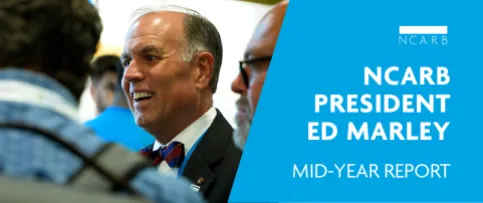
The first episode, Understanding Why Licensure Is the Way It Is (Today) is now available. Hosted by NCARB’s Vice President of Marketing, Communications, and Data, Andy McIntyre, this episode includes an interview with FY26 NCARB President Edward T. Marley, FAIA, NCARB, LEED AP. President Marley provides an overview of the Pathways to Practice initiative and its goal of creating a more accessible yet equally rigorous licensure process.
Then, McIntyre and Assistant Vice President of Marketing, Communications & Data Amanda Pica discuss the history of architectural licensure and regulation in the U.S., including NCARB’s formation in 1919. The podcast also dives into the evolution of NCARB’s programs and why states first adopted national standards related to education, experience, and examination for architectural licensure.
Subscribe to the NCARB Podcast to hear future episodes as they become available on Spotify, Apple Podcasts, or other podcast hosting platforms. Season one, which focuses on NCARB’s annual data report, NCARB by the Numbers, is also available.
About NCARB
The National Council of Architectural Registration Boards’ membership is made up of the architectural licensing boards of the 50 states, the District of Columbia, Guam, the Northern Mariana Islands, Puerto Rico, and the U.S. Virgin Islands. NCARB, in collaboration with these boards, facilitates the licensure and credentialing of architects to protect the health, safety, and welfare of the public.
To achieve these goals, NCARB works with its Member Boards and volunteers to develop and facilitate standards for licensure, including the national examination and experience program. NCARB also recommends regulatory guidelines for licensing boards and helps architects expand their professional reach through the NCARB Certificate. Connect with NCARB on Instagram, LinkedIn, Facebook, and YouTube.