Washington, DC—The National Council of Architectural Registration Boards (NCARB) and the South African Council for the Architectural Profession (SACAP) signed a new Mutual Recognition Agreement (MRA), increasing international practice opportunities for U.S. architects. The MRA goes into effect on Monday, July 6, 2026.
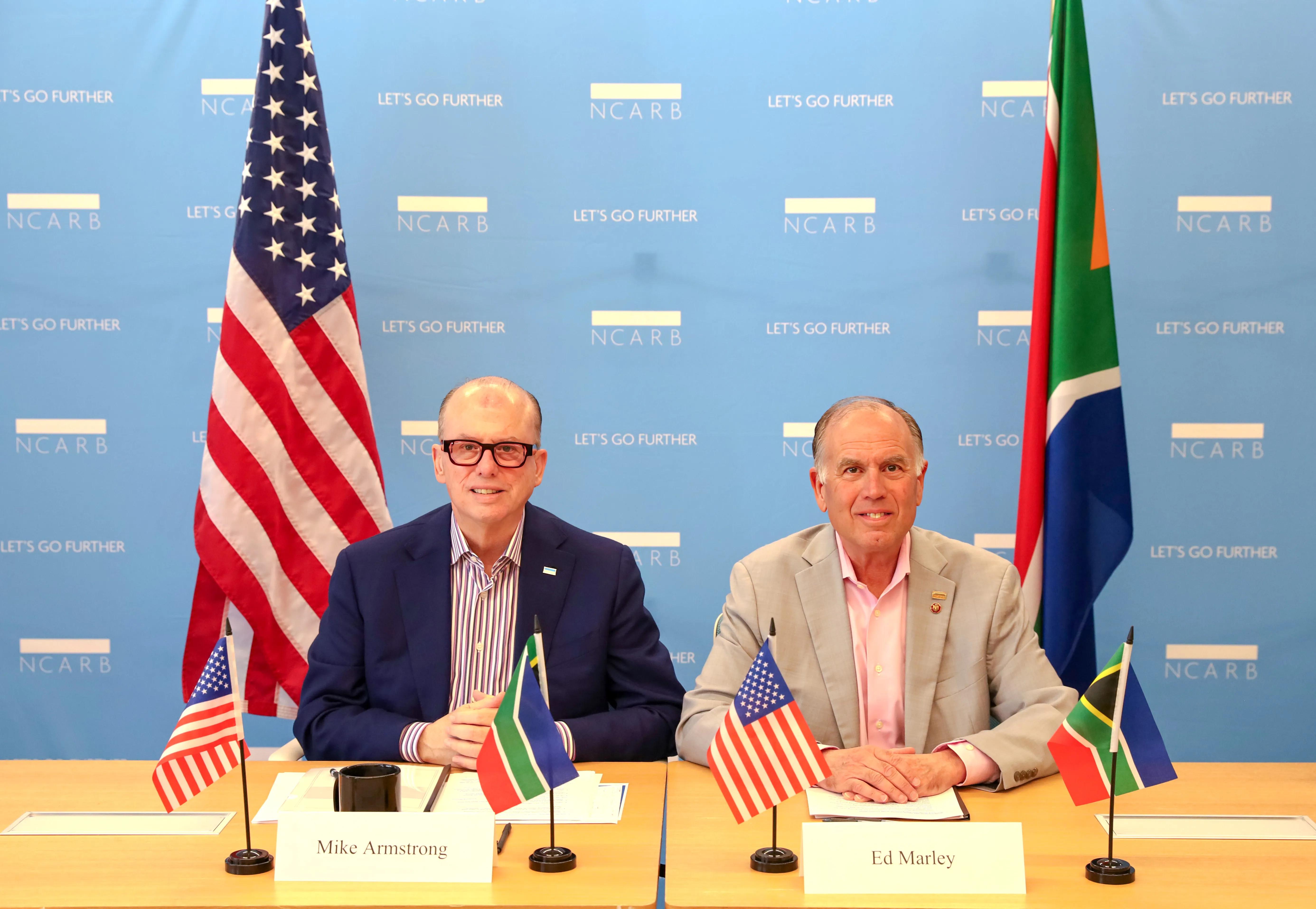
The agreement will provide a new path for architects to become reciprocally licensed and expand their careers in each country.
“NCARB is thrilled to continue to expand international practice opportunities for U.S. architects in multiple countries and, now, to our first MRA partner on the African continent,” said FY26 NCARB President Edward T. Marley, FAIA, NCARB, LEED AP. “By ensuring that all NCARB-certified architects can take advantage of this agreement with South Africa, we’re expanding the value of the NCARB Certificate as a global practice passport.”
“The 6th Term Council is pleased to announce its first Mutual Recognition Agreement with NCARB. This milestone agreement is intended to strengthen professional mobility for architects by creating a structured pathway for recognition between South Africa and the U.S.” said SACAP President Charles Nduku, Pr.Arch, MIArch. “This arrangement reflects our commitment to international cooperation, alignment of professional standards, and the advancement of architectural practice across jurisdictions, while also enhancing opportunities for South African architects to practice in the U.S., subject to the applicable regulatory requirements.”
The agreement is based on shared competencies obtained at the point of licensure and accepts architects from a variety of backgrounds—including all of those who hold the NCARB Certificate, whether licensed via a traditional path or through the Education Alternative or International Architect Path. This latest MRA is modeled after similar arrangements between NCARB and Australia, Canada, New Zealand, and the United Kingdom. To apply for a reciprocal license in either country, architects must:
- Be licensed and in good standing in a participating jurisdiction in their home country
- For U.S. architects, hold an active NCARB Certificate
- For South African architects, be licensed at the level of “professional architect”
Architects initially licensed in their home country—whether the U.S. or South Africa—by means of a separate MRA with another country are not eligible for reciprocity under this agreement.
NCARB enters into MRAs with countries based on a thorough review of their regulatory requirements for licensure as an architect, including an evaluation of competencies required and assessed through education, experience, examination, and continuing education. This agreement was approved by NCARB’s member licensing boards during the organization’s 2025 Annual Business Meeting. Because each U.S. jurisdiction is responsible for the regulation of architecture within its borders, each U.S. jurisdiction must individually determine if it will accept the MRA. NCARB assumes that acceptance of the NCARB Certificate by a jurisdiction includes acceptance of MRAs, unless that jurisdiction specifically opts out or is legally prohibited from accepting such agreements. A list of jurisdictions participating in the agreement is available on ncarb.org and will be updated as additional jurisdictions confirm their participation.
To learn more about earning a license to practice architecture abroad, visit www.ncarb.org/international.
About NCARB
The National Council of Architectural Registration Boards’ membership is made up of the architectural licensing boards of the 50 states, the District of Columbia, Guam, the Northern Mariana Islands, Puerto Rico, and the U.S. Virgin Islands. NCARB, in collaboration with these boards, facilitates the licensure and credentialing of architects to protect the health, safety, and welfare of the public.
To achieve these goals, NCARB works with its Member Boards and volunteers to develop and facilitate standards for licensure, including the national examination and experience program. NCARB also recommends regulatory guidelines for licensing boards and helps architects expand their professional reach through the NCARB Certificate. Connect with NCARB on Instagram, LinkedIn, Facebook, and YouTube.
About SACAP
The South African Council for the Architectural Profession’s vision is for transformed architectural leaders to serve society in a sustainable built environment. Its mission is for a SACAP that is inclusive and transparent; an architectural profession recognized as a global leader in the built environment; and a clear understanding of its mandate amongst other regulators and stakeholders toward comprehensive, conclusive delivery.