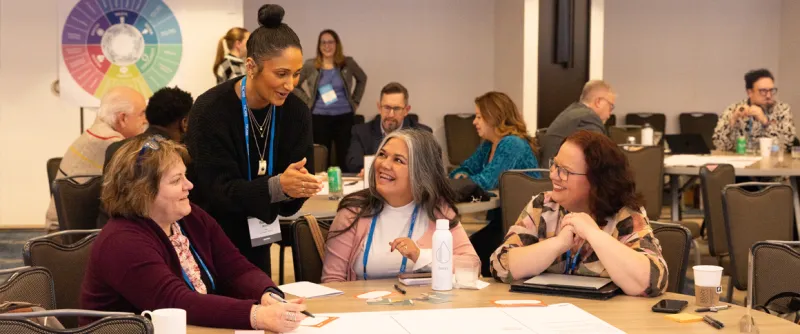
On December 12, 2025, architects, regulators, and industry innovators gathered for NCARB's second-ever Futures Symposium to explore three critical forces reshaping the profession: artificial intelligence (AI), resource stewardship, and well-being. The day-long event—organized by NCARB’s Futures Collaborative—challenged attendees to consider not just how architecture is changing, but how regulatory frameworks must evolve to protect the public in an era of rapid transformation.
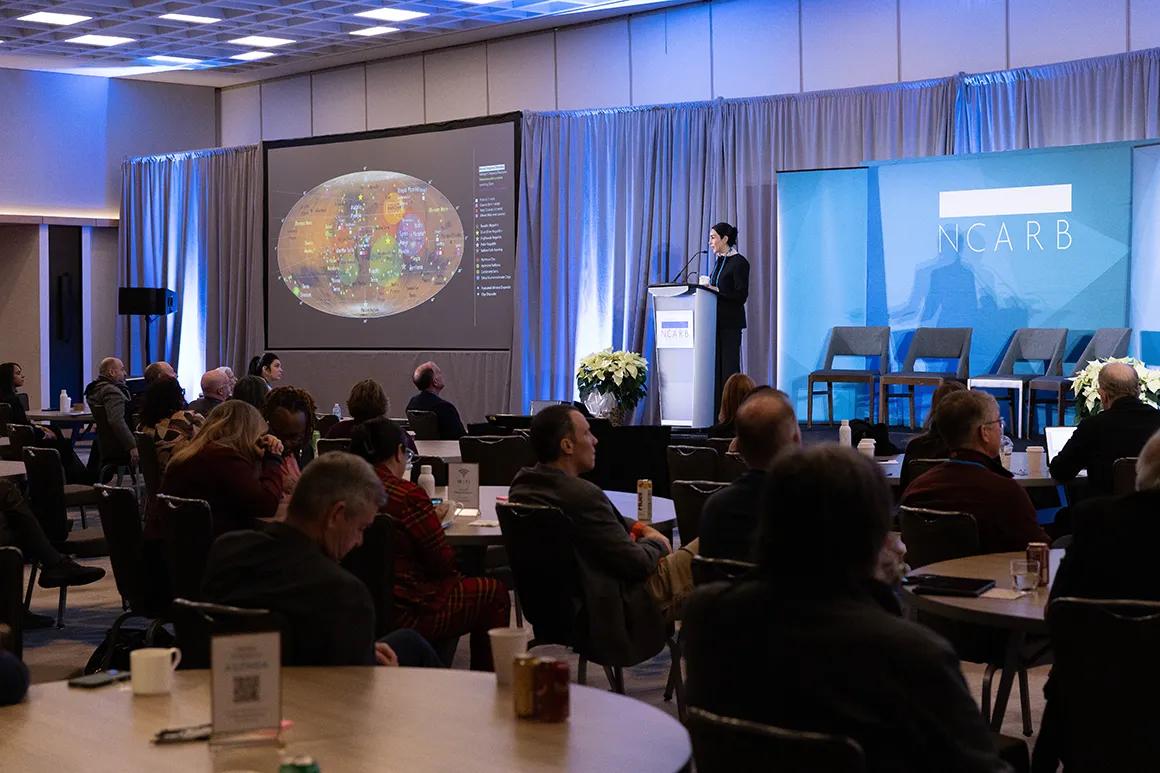
After opening remarks from the FY26 Futures Collaborative Chair, Dena Prastos, AIA, NCARB, the day began with a presentation from Melodie Yashar, founder of AENARA and a pioneer in space architecture. Yashar set the tone for the day's discussions by examining how extreme environments demand new approaches to design, construction, and human welfare.
Space is a conceptual lens for how we approach and practice architecture. It helps us consider the importance of sustainable design methodologies and resource utilization, as well as the ethics of land use.
—Melodie Yashar | AENARA
The Future of Well-Being: Redefining Welfare
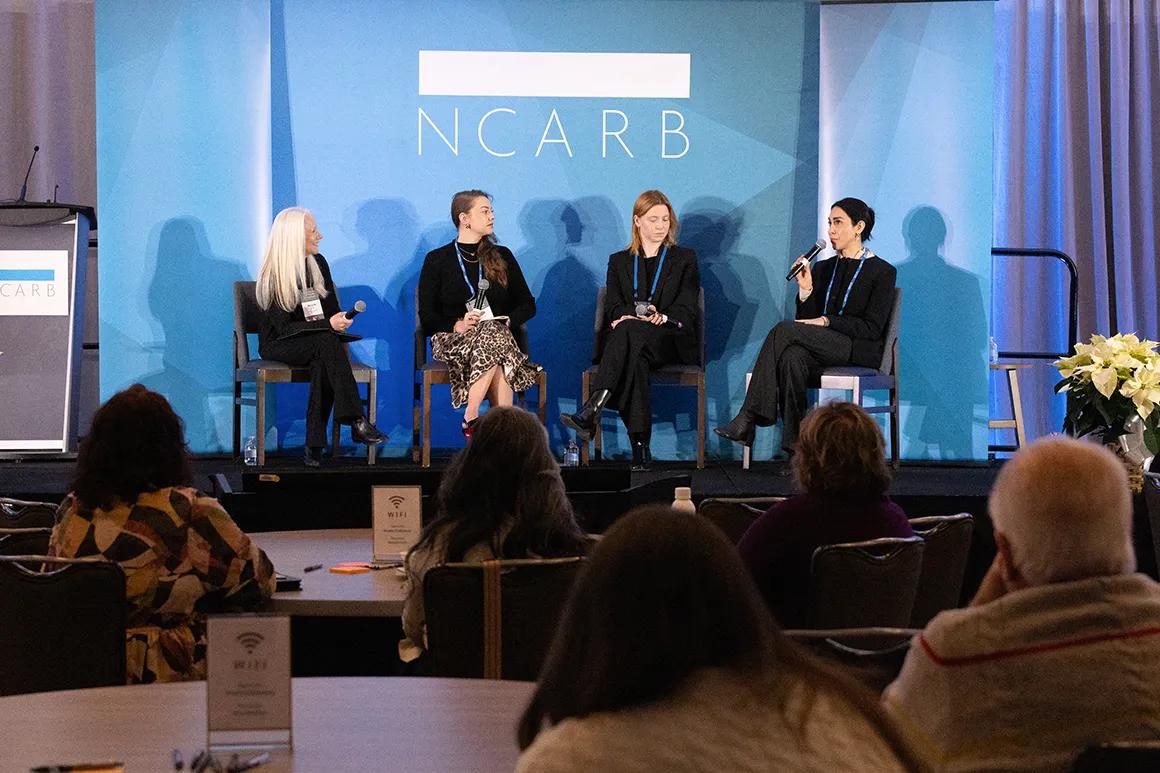
The first panel session expanded on Yashar's themes, bringing together experts who are fundamentally rethinking what it means to design for human welfare. Joining Yashar were Megan Anderson (Deloitte), a strategic foresight consultant with expertise in psychology, and Cleo Valentine (HKS), whose work bridges architecture, computational neuroscience, bioethics, and public health.
The conversation moved beyond traditional safety considerations to explore how buildings impact occupants' physical and mental health in measurable ways.
Our research is beginning to show that the built environment influences human health far more than previously understood ... And I believe that spatial design remains one of the most profound and underutilized tools for improving public health.
—Cleo Valentine | HKS
The Future of Resource Stewardship: Balancing Innovation With Regulation
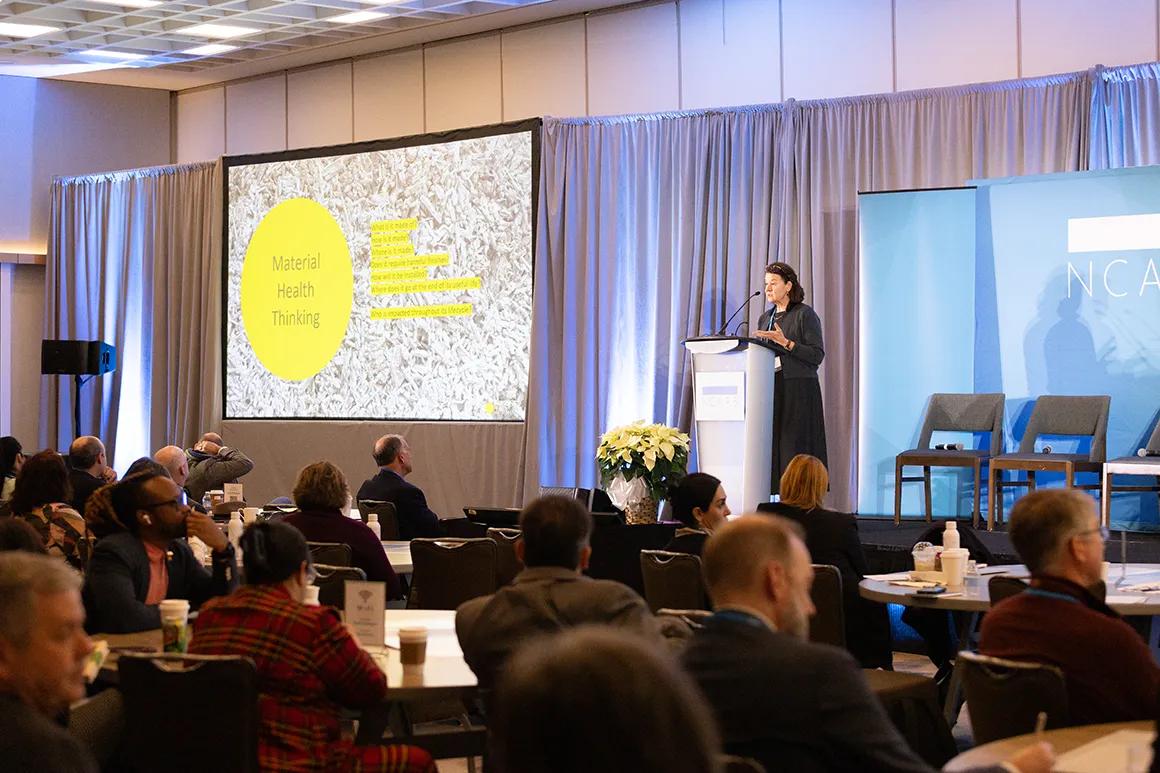
The second session tackled one of architecture's most pressing challenges: how to advance sustainable material practices while maintaining regulatory oversight that protects the public. Alison Mears, executive director and co-founder of Parsons Healthy Materials Lab, and Wyly Brown, NCARB, AIA, founding partner of LBGO Architects and member of NCARB's Futures Collaborative, explored the tension between innovation, regulation, and accountability, as well as tough questions like “What do we do when the resources we’ve depended on simply run out?”
We need architects to be able to try new things in a safe way.
—Wyly Brown | LGBO Architects
The Future of Artificial Intelligence: Redefining Tools, Roles, and Responsibility
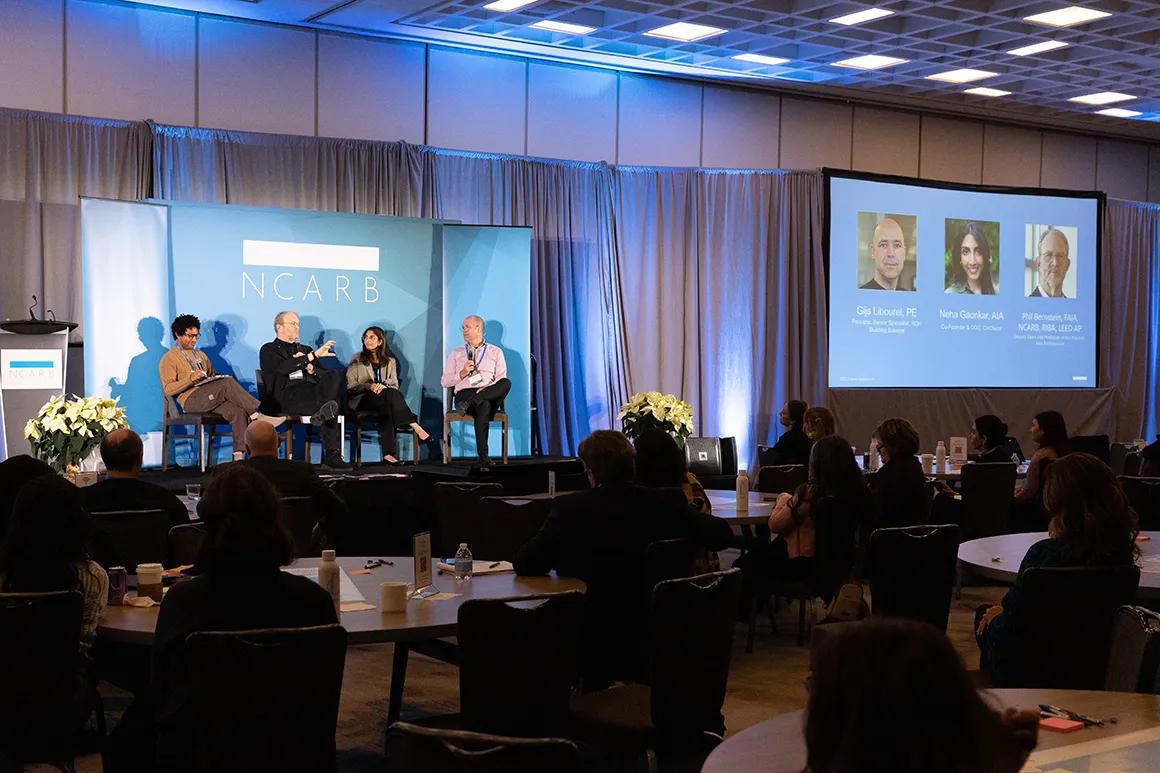
Perhaps the most urgent topic of the day centered on AI and its rapidly expanding role in architectural practice. The panel brought together three distinct perspectives: Gijs Libourel from RDH Building Science's structural and façade engineering team, Phil Bernstein, deputy dean at Yale School of Architecture, and Neha Gaonkar, co-founder of CivCheck, an AI-powered platform streamlining government permitting processes.
The discussion examined how AI could represent not simply a new tool but a fundamental shift in how architects work and what expertise means in an automated future.
Looking Forward: Foresight as Practice
Radha Mistry, Arup’s Americas foresight leader, closed the symposium by contextualizing the day’s discussions within the broader practice of strategic foresight. Her background spanning architecture, narrative environments, and futures thinking offered a framework for understanding how the profession can prepare for—rather than simply react to—transformative change.
The Futures Collaborative
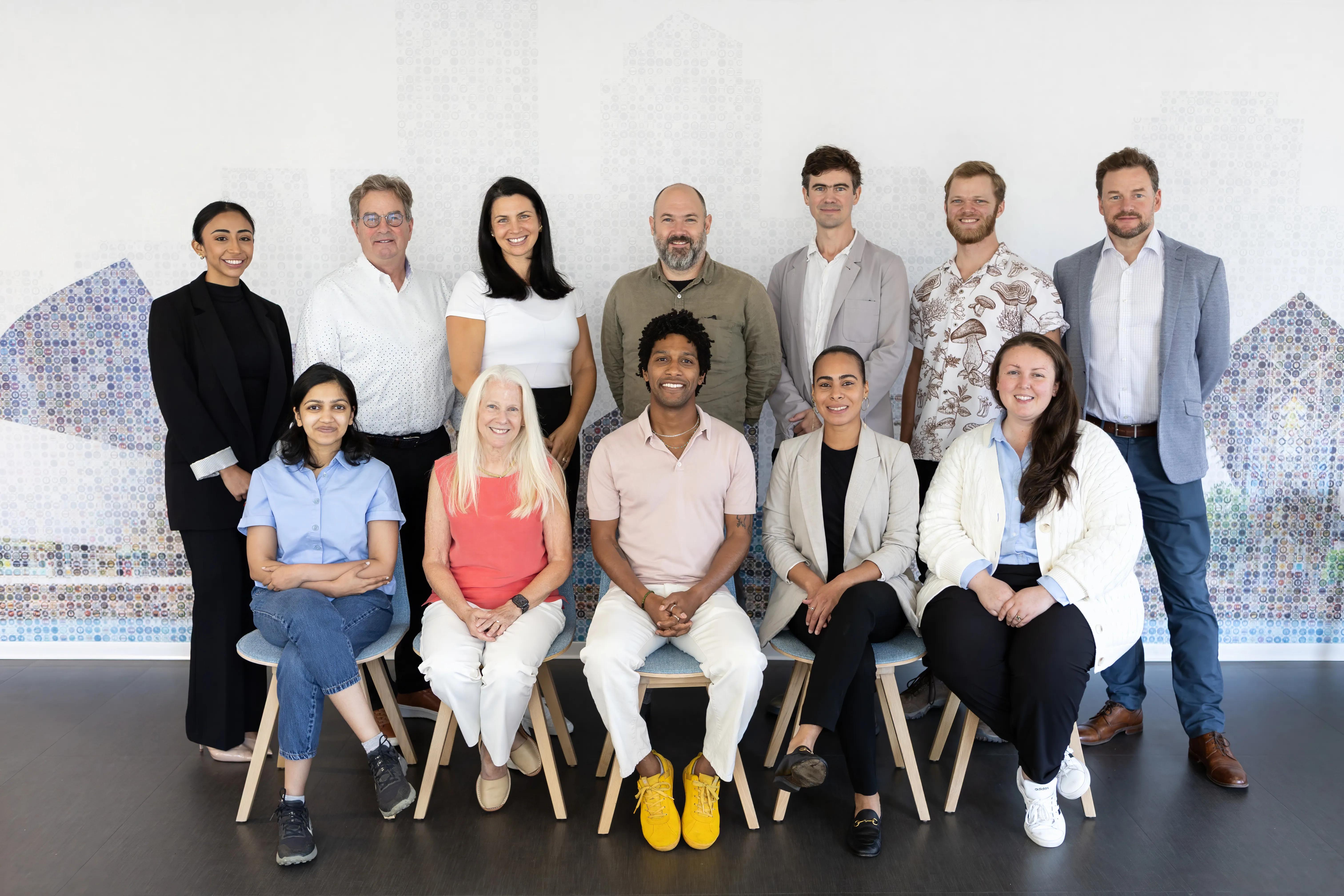
Established in 2017, the Futures Collaborative focuses on exploring future societal, technological, and architectural practice trends that could transform how NCARB and its members facilitate the licensing and credentialing of architects. Members of the collaborative include leading architects, experts in emerging technologies, and architectural licensing board members who work together to identify and monitor potential changes in the regulatory environment and architectural practice. FY26 members of the Futures Collaborative are:
- Dena Prastos, AIA, Chair
- Maria Antony Katticaran
- Carlos Augusto Garcia, AIA, NCARB, WELL AP
- Marjorie Brown, NCARB, AIA, LEED AP
- Wyly Brown, NCARB, AIA
- Jenarmi Contreras, Assoc. AIA, WELL AP
- Scott Cornelius, RA, AIAS, LEED Green Assoc.
- Rebecca Ruppert, AIA, NCARB
- Alastair Stokes, AIA, NCARB
- Walt Teague, FAIA, NCARB, LEED AP, SEED AP
NCARB staff liaisons to the FY26 Futures Collaborative are Andy McIntyre and Lizeth Castro, MBA.