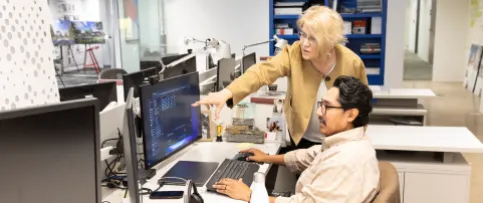
Abraham Sachariah, RA, NCARB, LEED AP BD+C, SARA, AIA, is a senior architect at Arcadis in the greater Philadelphia area. He earned a Bachelor of Science in architecture from the New Jersey Institute of Technology and his Master of Architecture (M.Arch.) from Boston Architectural College. We asked him about the challenges of working during the COVID-19 pandemic, the importance of collaborating with peers and professionals, and other licensure-related insights.
What inspired you to pursue a career in architecture?
I had an interest in math and using technology for creative activities like film editing and photography. In high school, I took a drafting class where I learned to hand draft objects in orthogonal projections for the first half of the year before transitioning to CAD software in the second half. This experience introduced me to architecture as a career path and showed me that it could bring those interests together.
One thing I wish I had understood earlier was how much licensing requirements can vary by jurisdiction and that your supervisor may not always be aware of every requirement.
What do you wish others knew about the path to becoming an architect?
One thing I wish I had understood earlier was how much licensing requirements can vary by jurisdiction and that your supervisor may not always be aware of every requirement. I wish I had known about NCARB licensing advisors, who are another resource when I had questions.
I also learned how important it is to work with your supervisor about opportunities to learn about the different decisions architects make. Those experiences give you practical knowledge you can draw from for the Architect Registration Examination® (ARE®) and later apply when you encounter similar situations in practice.
You entered the profession amidst a challenging job market after the Great Recession. What advice would you give to licensure candidates today facing similar challenges?
The job search can be discouraging when you are not hearing back from potential employers, but I learned that it was important to keep putting myself out there, even outside of architecture. I volunteered at a community art center where I met a retired recruiter who helped me with my resume and interview preparation. She helped me prepare for opportunities, but I also had to think differently about where to find them because not every opening appears on a traditional job board. Staying connected with peers and professionals can open doors you were not expecting.
How did obtaining your LEED AP BD+C certification help with ARE preparation?
Preparing for the LEED exams helped me develop the structure I needed to approach the ARE, especially because I had not taken an exam in many years. I had to rethink when and where I studied, how I took notes, and how to balance studying with work and personal responsibilities. Passing the LEED Green Associate and LEED AP BD+C exams validated my study approach and gave me a foundation to carry into the preparation for the ARE.
Working in life science design, how did you adapt to a quickly changing landscape during the COVID-19 pandemic?
I was designing COVID-19 vaccine manufacturing facilities during the pandemic, and it was one of the most demanding experiences of my career because of how quickly design parameters could change. Working remotely was already familiar to me from my previous experiences after Superstorm Sandy and through the M.Arch. distance program at Boston Architectural College, and I was able to adapt while maintaining communication with the project team.
Since I was comfortable working remotely, I could draw on my life science and architectural experience to understand the ever-changing requirements and their impact on the other disciplines involved. This allowed me to anticipate the needs of the engineers and plan for them architecturally before we coordinated the details.
I was designing COVID-19 vaccine manufacturing facilities during the pandemic, and it was one of the most demanding experiences of my career because of how quickly design parameters could change.
What future projects or areas of the profession are you most interested in pursuing?
I have been fortunate to work for both small and large companies on complex projects that have had regional and global impact. Rather than focusing on a particular project type, I am interested in opportunities that broaden my role as an architect. My service as a member of the board of directors for the Society of American Registered Architects (SARA) allows me to help shape the nonprofit’s priorities and advocate for our profession in various capacities. I have found that some of the most rewarding opportunities in my career have been unexpected, and I want to continue being open to new ways I can contribute as an architect.
Want to hear more from architects across the U.S.? Check out more stories from NCARB's Architect Spotlight series.