
Data from the 2026 edition of NCARB by the Numbers shows that the current “single path” approach to architectural licensure can create a variety of unintended obstacles for candidates—including higher levels of student debt, lack of accessibility, and longer times to licensure. Through a new section of this annual report, NCARB explores these pinch points and new findings that show where licensure may need to evolve as part of the Pathways to Practice initiative.
Understanding where licensure candidates typically fall off the path to licensure helps NCARB better assess barriers on the path to licensure and identify opportunities to improve accessibility. Because the average time to licensure in 2025 was 12.3 years, the average architect who earned their license in 2025 started the path to licensure in 2012. Of individuals who started their NCARB Record in 2012, approximately 37% have since stopped pursuing licensure.
For most racial and ethnic groups, inactive candidates were most likely to fall off the path to licensure after completing one of NCARB’s core programs (typically the Architectural Experience Program® (AXP®). For candidates who fell off the path during the AXP, 61% were over halfway done reporting hours. But NCARB’s data shows that Black or African American candidates were most likely to stop pursuing licensure before making any progress on the AXP or Architect Registration Examination® (ARE®). This disparity could be a result of factors such as not being encouraged to pursue licensure or difficulty finding a supportive firm—barriers that NCARB and the National Organization of Minority Architects’ (NOMA) joint Baseline on Belonging study shows are more likely to impact Black candidates.
When looking at attrition by gender, women were slightly more likely than men to stop pursuing licensure after completing a core program, while men were slightly more likely than women to stop pursuing licensure before making any AXP or ARE progress. Because women demonstrate lower ARE pass rates than men, this disparity could be a result of female candidates facing greater challenges completing the ARE. NCARB’s Pathways to Practice effort can help ensure that candidates can better navigate potential barriers throughout the licensure path by demonstrating an equal level of competency through a different—but equally rigorous—assessment method.
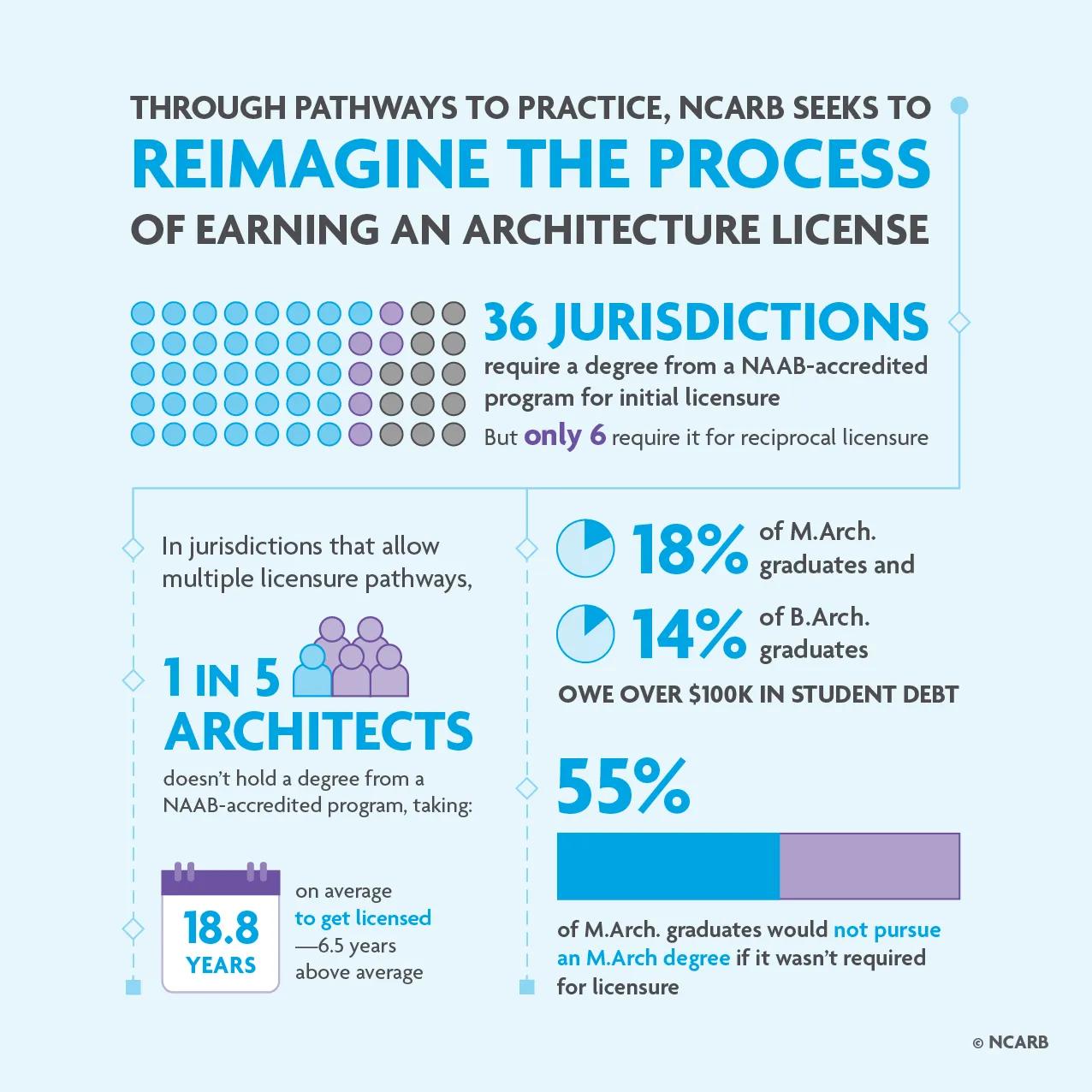
Earning a degree from an accredited program typically takes 5-7 years. Often, candidates graduate from a non-accredited, 4-year program and then return to school for a Master of Architecture degree, an investment of time and resources that can create a significant burden on early career professionals. Individuals without a degree from a NAAB-accredited program must typically demonstrate additional years of experience to qualify for initial licensure, resulting in longer times to licensure than their peers. In 2025, new architects without a degree from a NAAB-accredited program took 18.8 years, on average, to earn a license—6 and a half years above the national average.
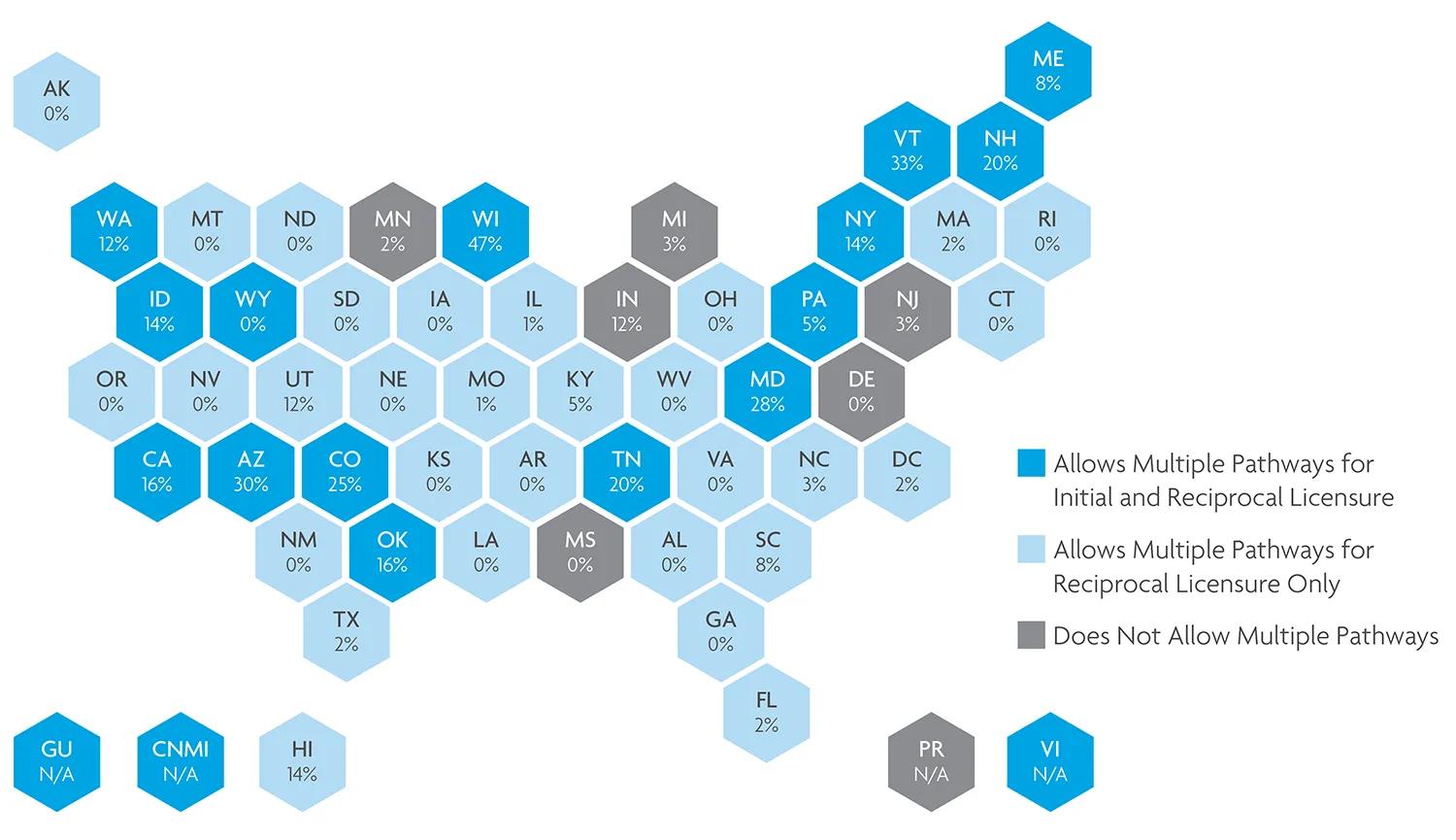
Only 19 jurisdictions offered pathways to initial licensure without a degree from a National Architectural Accrediting Board (NAAB)-accredited program in 2025. However, 49 jurisdictions allowed pathways to reciprocal licensure without a degree from a NAAB-accredited program. NCARB is working to encourage more choice through our Pathways to Practice effort—and in early 2026, we saw two additional jurisdictions (Massachusetts and North Dakota) align with offering multiple pathways.
About NCARB by the Numbers
The findings in NCARB by the Numbers are pulled from NCARB’s database of over 127,000 licensure candidates and architects, making this annual report the most comprehensive source for licensure statistics. Learn more about trends on the path to licensure in the 2026 edition of NCARB by the Numbers!