
Some of the most common pinch points in the licensure process show that factors like student loan debt, non-traditional education pathways impacting time to licensure, and challenging firm cultures lead people to pause or completely stop the process of getting licensed. Nearly 61% of candidates that fell off the path during the Architectural Experience Program® (AXP®) were over halfway done reporting their hours. What’s more, Black or African American candidates were most likely to stop pursuing licensure before making AXP or Architect Registration Exam® (ARE®) progress.
Inclusivity and representation can ensure that qualified applicants can both enter the licensure process and remain engaged through the point of initial licensure without serious impediments. Even though growth in some areas remains slow, the 2026 NCARB by the Numbers report reveals incremental growth across gender and race year-over-year at all levels of the profession.
In 2025, 49% of licensure candidates identified as a person of color. Every year since 2021 (45%) has seen a 1 percentage point increase in minority representation. Likewise, in 2025, 21% of new architects identified as a person of color, up from 17% in 2021. The same 4 percentage point increase can be seen in those who complete the AXP from 2021 (43%), as people of color made up 47% of the total completions in 2025. Among the licensure candidate population, Latino men (11%) and Asian women (10%) are the most represented candidates of color.
The 2026 NCARB by the Numbers report reveals incremental growth across gender and race year-over-year at all levels of the profession.
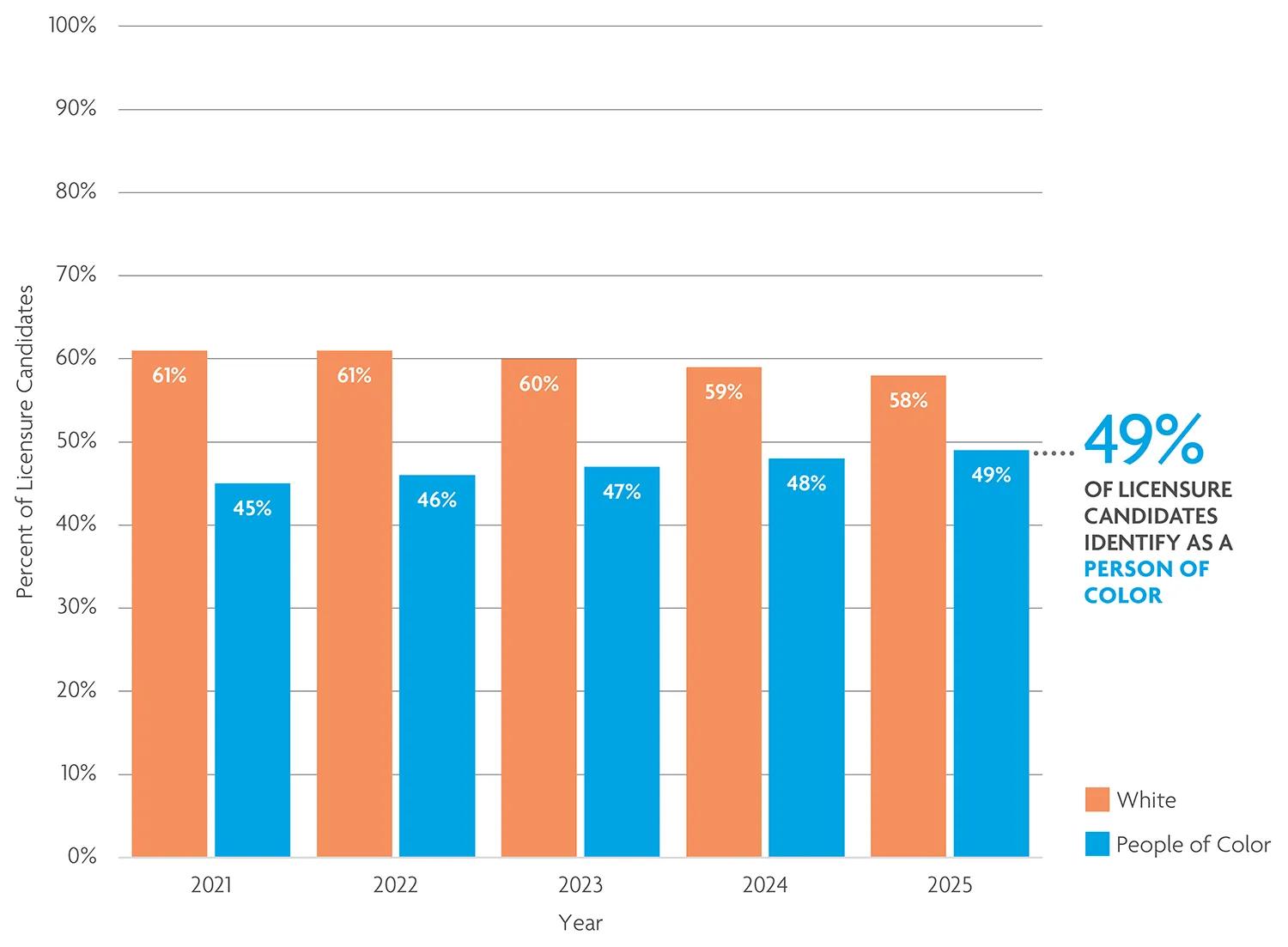
While most underrepresented groups have seen increases in representation the last five years, Black or African American representation amongst architects has remained at 2% since 2021, the lowest of any group. In 2025, most architects identified as white— 60% were white men and 21% were white women. Women of color make up just 9% of the architect population, compared to 14% for men of color. Each are 2 percentage points higher than in 2021, which lags behind the 4% total increase in growth seen in other race and gender categories since 2021.
The licensure candidate population has been approaching gender parity over the past decade. 47% of licensure candidates were women, and on average women completed the path to licensure a year faster than men (11.7 and 12.9 years, respectively). In addition, more than a quarter of current architects are women. The 2025 data shows 28% of the architect population are women, up 3 percentage points from 2021. Year-over-year, more women are pursuing licensure and remaining in the profession.
Year-over-year, more women are pursuing licensure and remaining in the profession.
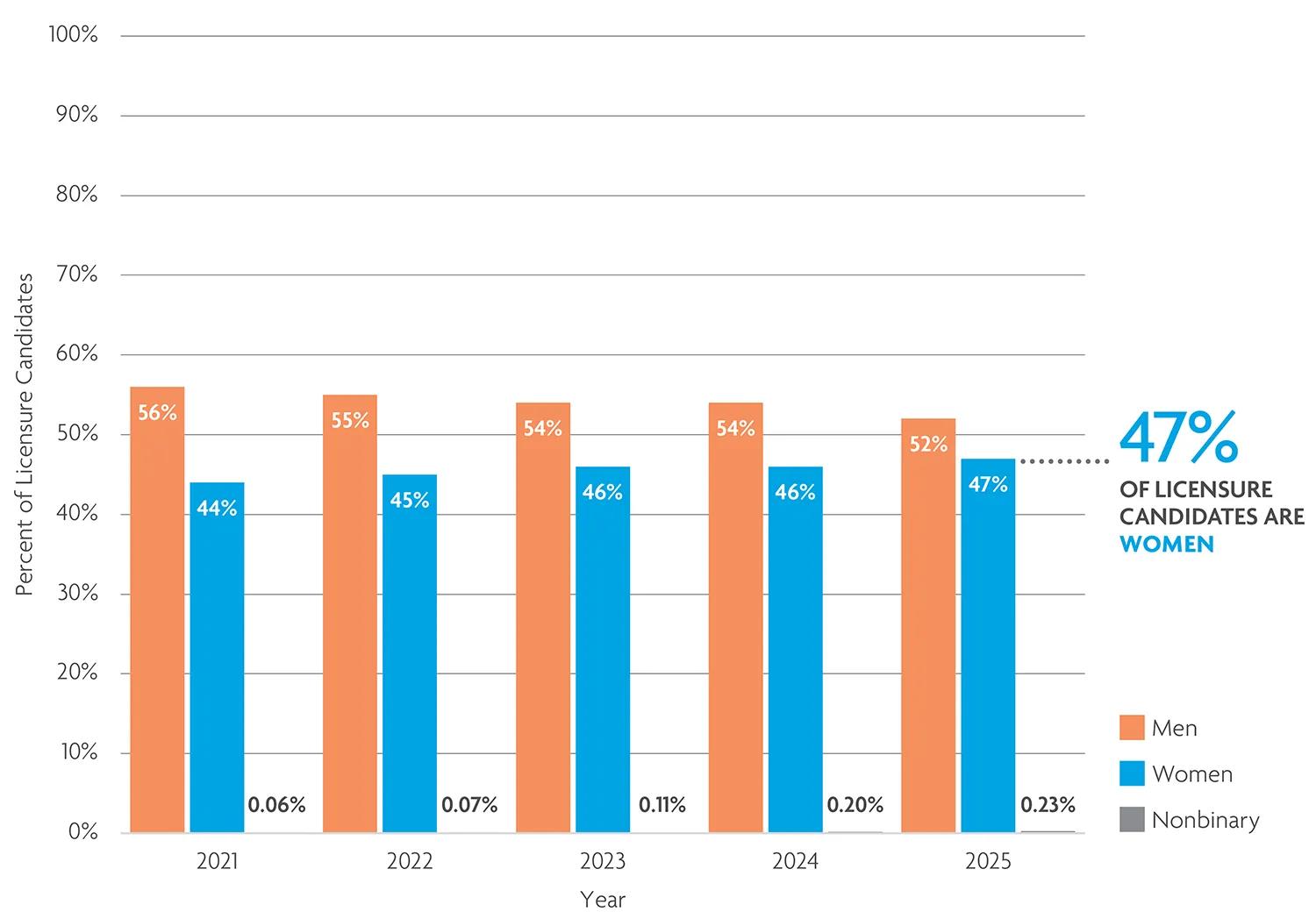
In 2025, candidates who identified as nonbinary sat at 0.23%, the second straight year this demographic group cleared the minimum sample size threshold of 30 individuals. Less than .02% of the architect population identified as nonbinary in 2025, approximately 10 individuals. NCARB’s threshold for minimum sample size is 30 individuals. NCARB began offering nonbinary gender options within customer Records in 2023, so this proportion could shift upward over time as more Record holders make use of demographic fields.
About NCARB by the Numbers
The findings in NCARB by the Numbers are pulled from NCARB’s database of over 127,000 licensure candidates and architects, making this annual report the most comprehensive source for licensure statistics. Learn more about trends on the path to licensure in the 2026 edition of NCARB by the Numbers!