
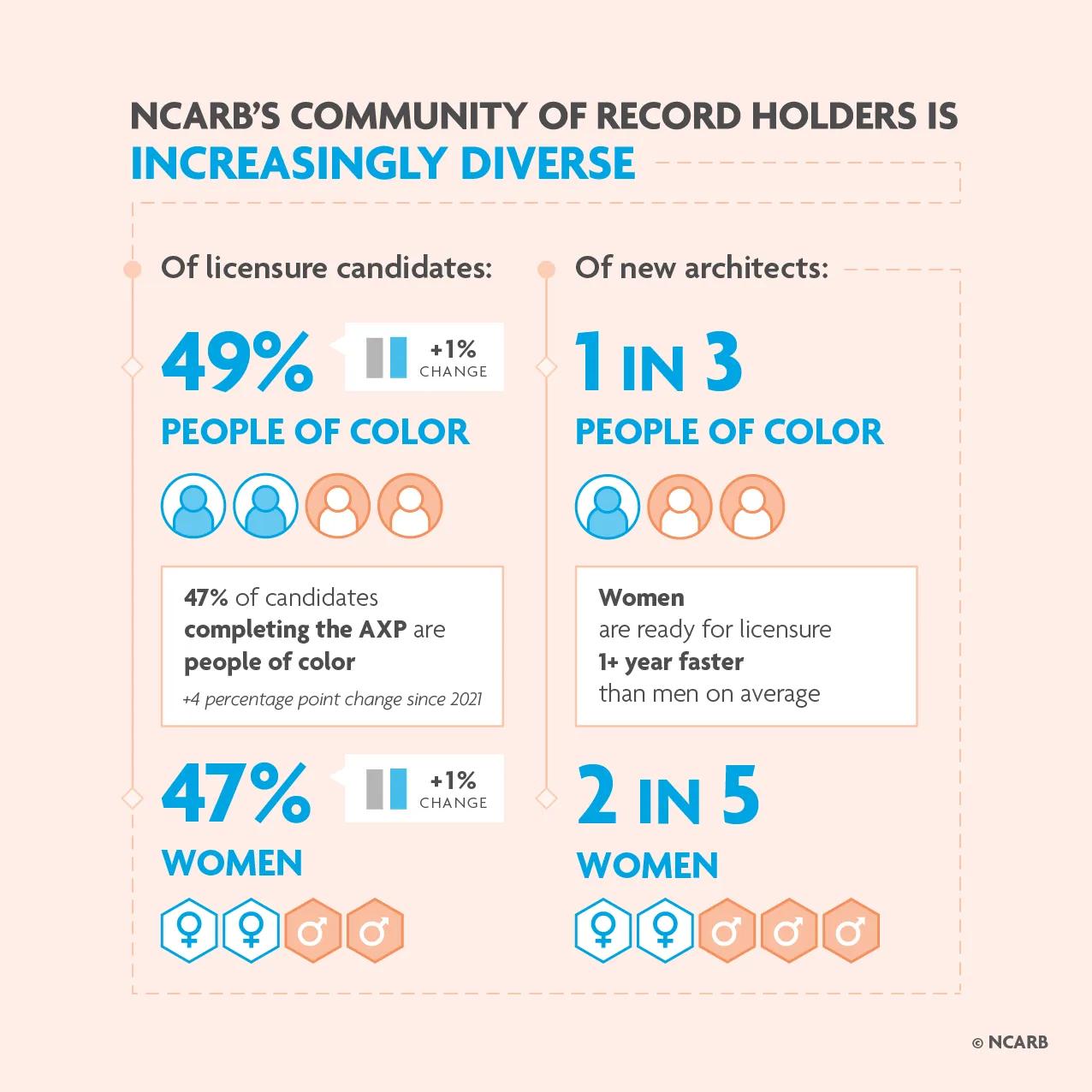
Over the past several years, NCARB has introduced several changes to improve accessibility within our programs, with the goal of ensuring that individuals of all backgrounds have a Pathway to Practice. Our data shows that these changes are having an impact. Greater diversity in the candidate population is beginning to make its way to the pool of licensed architects: In 2025, more than 1 in 5 architects identified as a person of color.
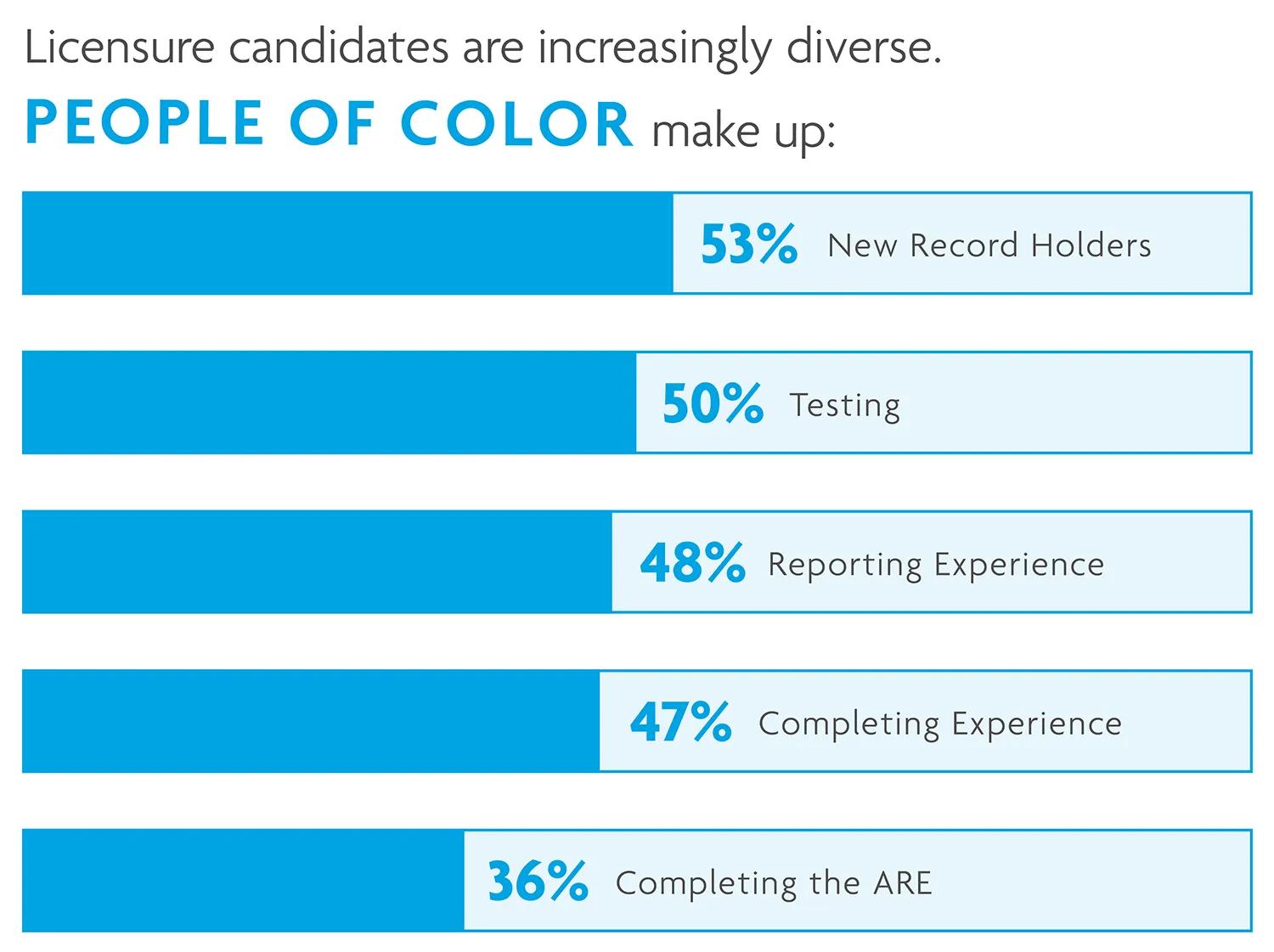
NCARB has seen sustained growth in gender equity and racial diversity across licensure candidate stages—from creating an NCARB Record to completing the Architect Registration Examination® (ARE®). In 2025, nearly half of all licensure candidates (49%) identified as a person of color. Women now represent 47% of licensure candidates, including 53% of new Record holders, and these increases are becoming more visible in the profession as candidates advance toward licensure.
Women account for 49% of the testing population and typically earn their licenses faster than men, completing requirements more than a year sooner on average. In 2025, 47% of candidates completing the Architectural Experience Program® (AXP®) and 36% of candidates completing the ARE identified as a person of color.
21% of architects identify as a person of color.
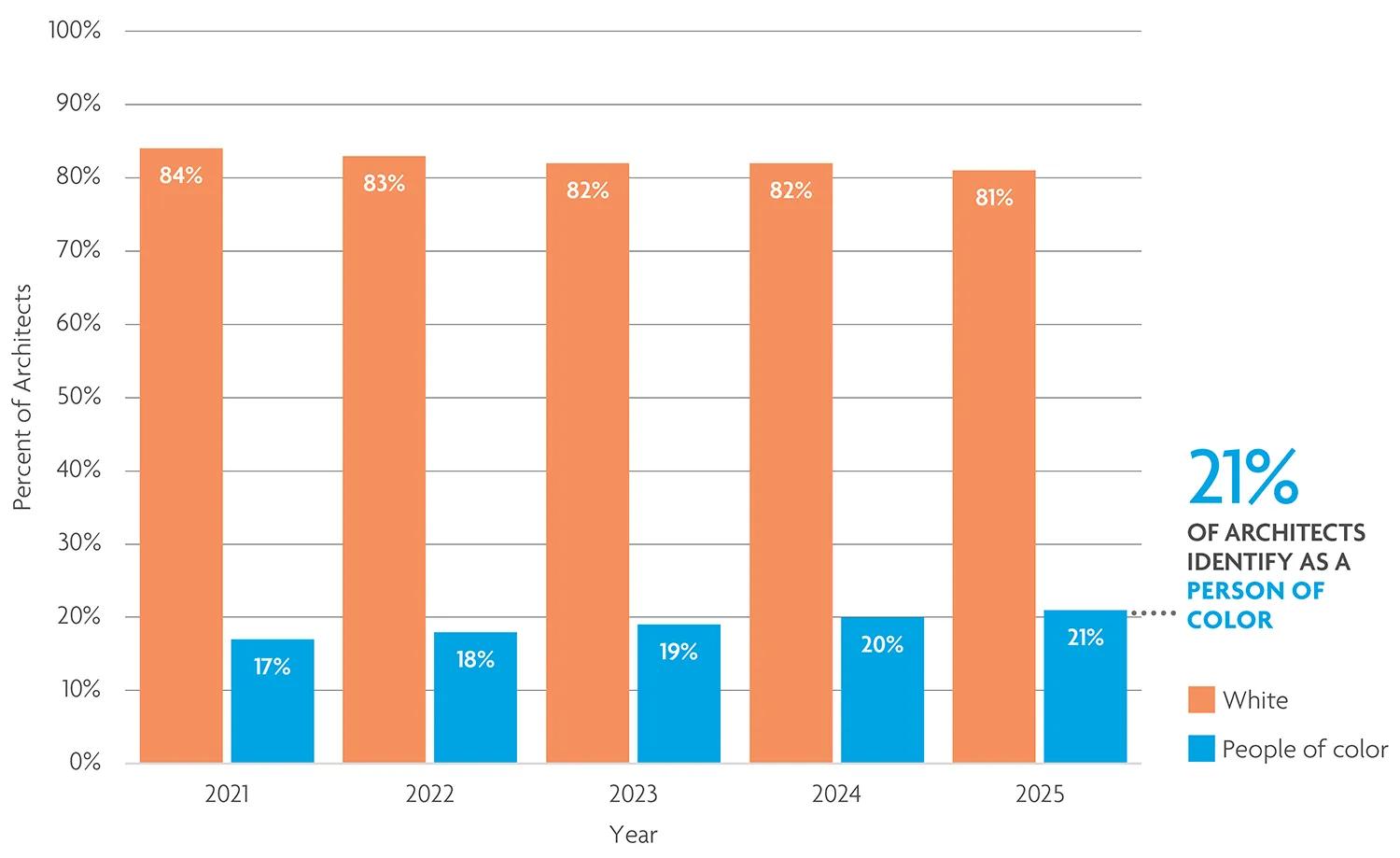
NCARB has seen steady growth in representation within the architect population over the past decade. The proportion of architects who identify as a person of color has risen by 1 percentage point each year over the past 5 years.
People of color now make up 21% of the total architect population, 4 percentage points higher than the proportion seen 5 years ago. While white architects still make up a majority of the population, increased diversity in the candidate pool is slowly filtering into the pool of licensed practitioners.
DID YOU KNOW? “People of color” includes anyone who identifies as a race or ethnicity other than white. Because individuals can identify as part of more than one racial or ethnic group, these percentages can add to more than 100%.
More than a quarter of architects are women.
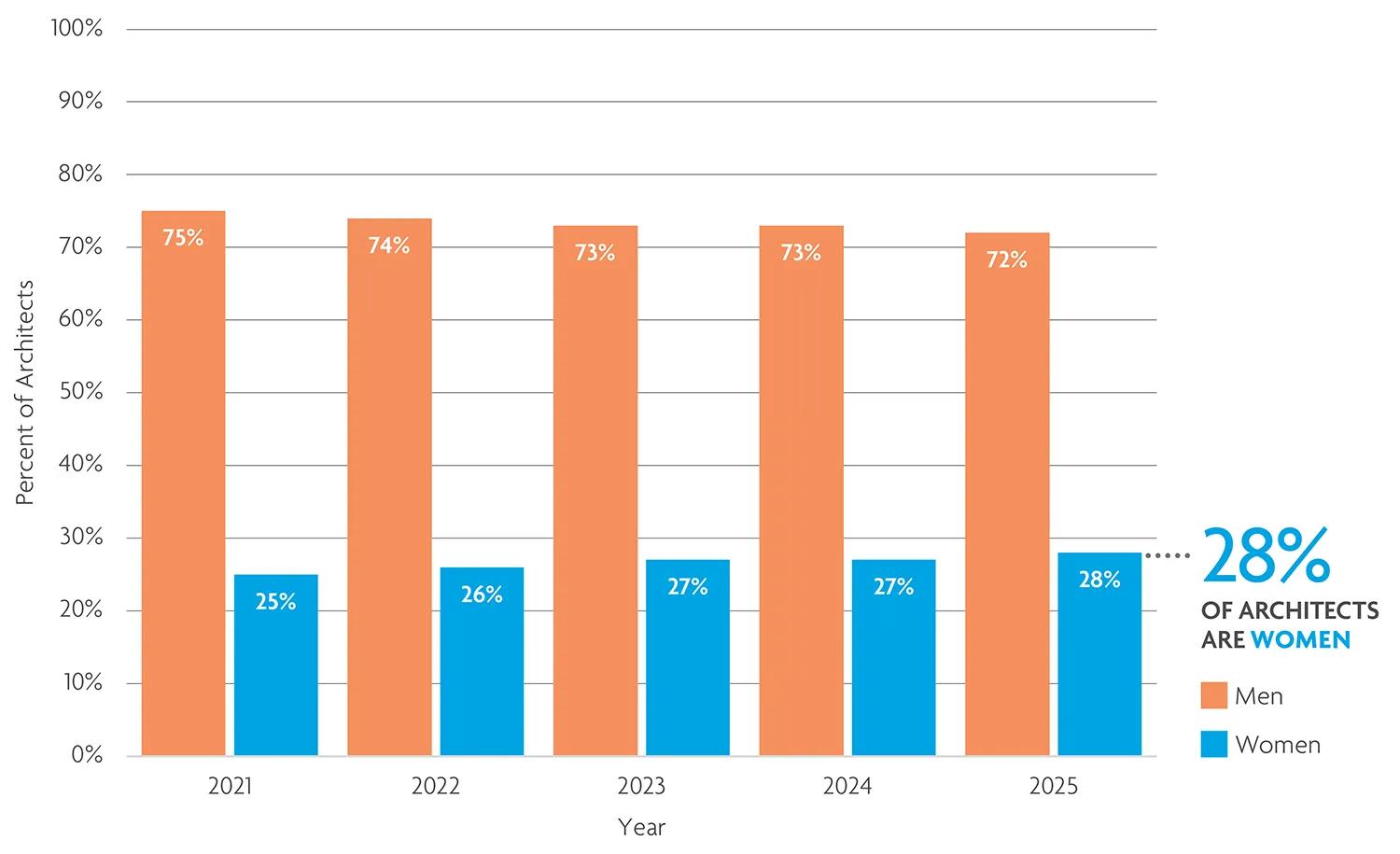
In 2025, 28% of the architect population identified as a woman, 1 percentage point higher than in 2024. Like racial and ethnic representation, gender representation has shown a slow-but-steady increase over the past several years: Women now make up 3 percentage points more of the architect population than they did in 2021.
According to NCARB’s Record holder data, less than .02% of the architect population identifies as nonbinary, approximately 10 individuals. NCARB’s threshold for minimum sample size is 30 individuals. NCARB began offering nonbinary gender options within customer Records in 2023, so this proportion could shift upward over time as more Record holders make use of the demographic field.
Racial and ethnic diversity among architects holds steady.
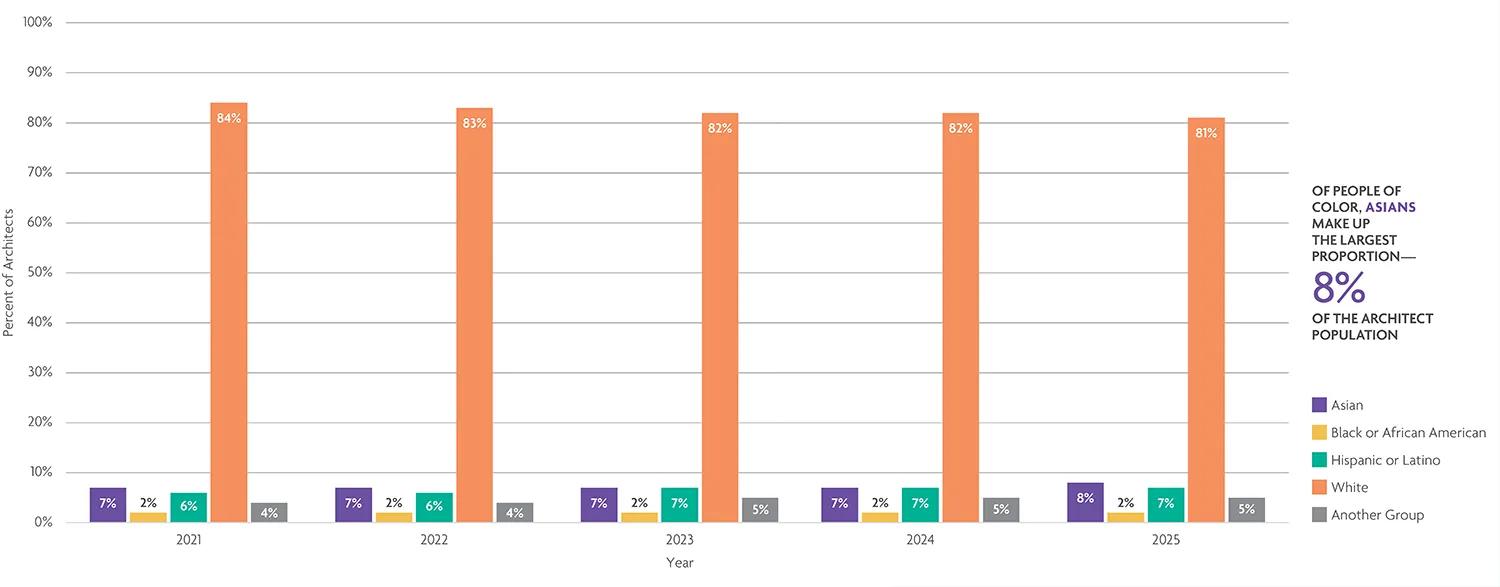
Racial and ethnic representation in the architect population shifted only slightly from 2024 to 2025: The proportion of Asian architects rose, while the proportion of white architects fell—both by 1 percentage point.
While most underrepresented demographic groups have seen slight increases over the past 5 years, Black or African American representation has remained unchanged.
WHAT IS “ANOTHER GROUP”? “Another group” includes architects who identify as any group that is too small to include on its own, as well as those who self-describe.
White men make up 3 out of every 5 architects.
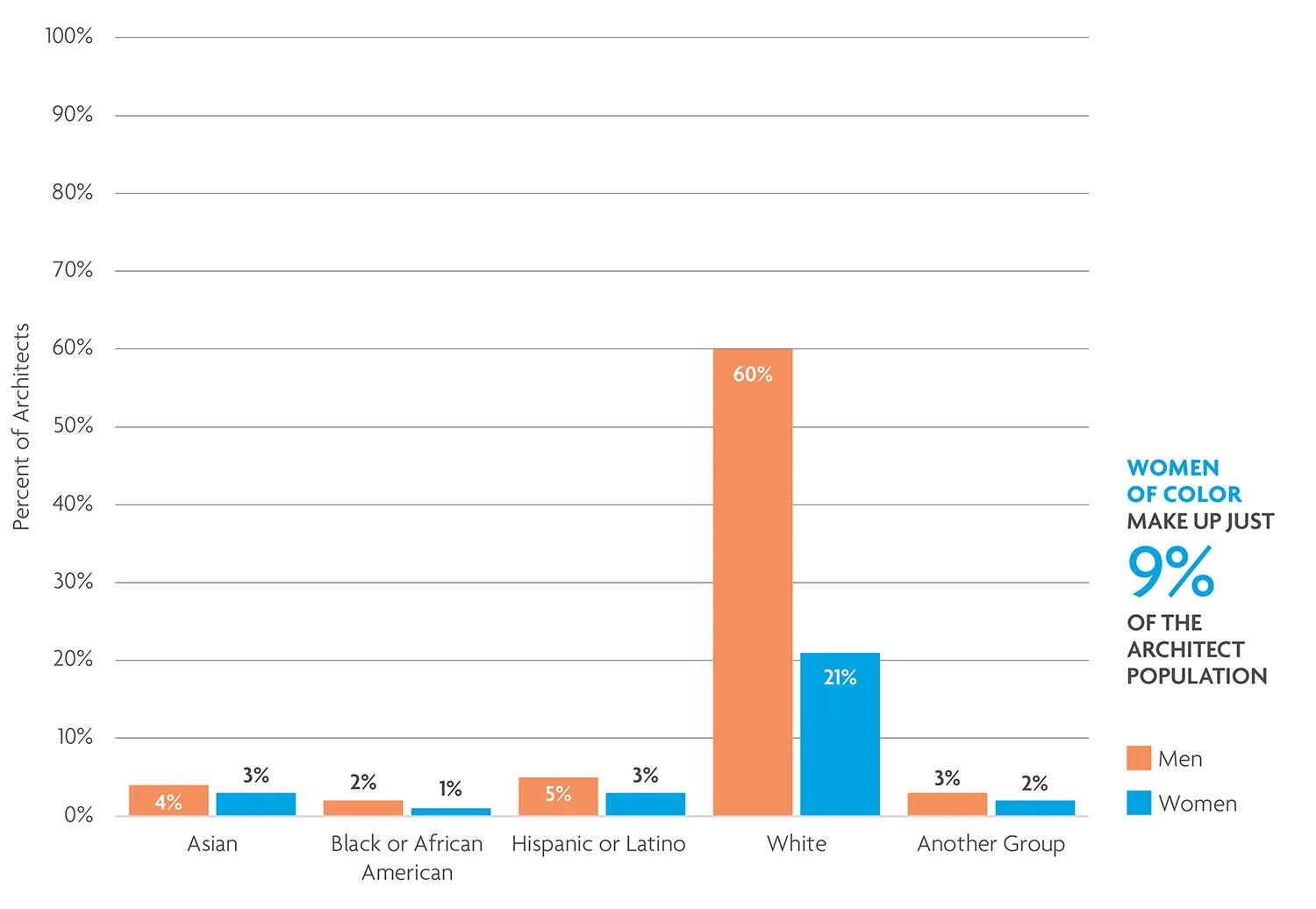
White men have historically been the most represented demographic within the architect population; in 2025, they made up 60% of all U.S. architects. White women are the second-most represented group, making up 21% of the total architect population.
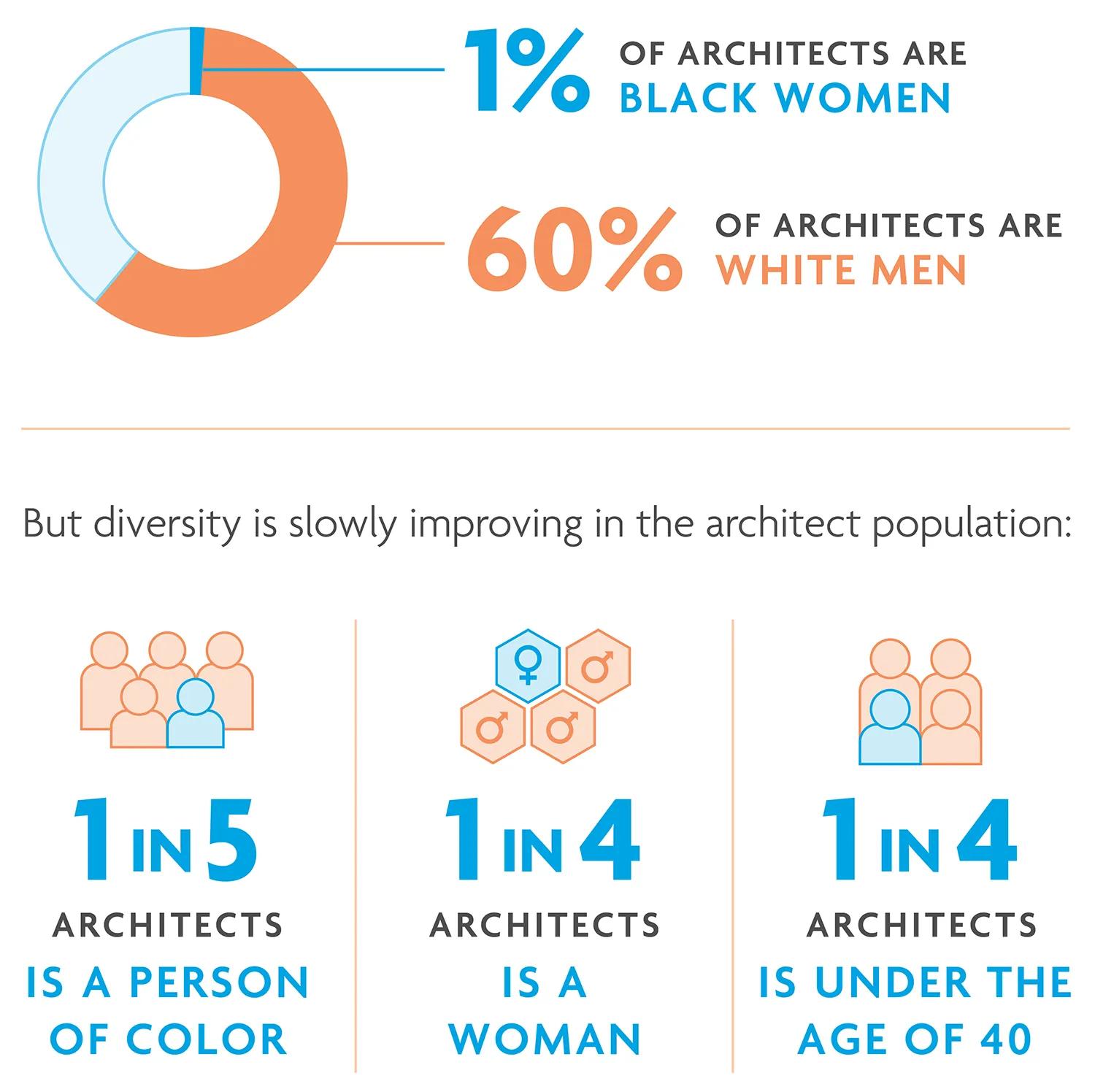
Representation for most other demographic groups has slowly improved over the past several years. In 2025, women of color comprised 9% of the architect population, and men of color comprised 14%—each 2 percentage points more than in 2021.
DID YOU KNOW? NCARB uses the NCARB Certificate holder population as an approximation for the architect population.
New architects are more diverse than the overall architect population.
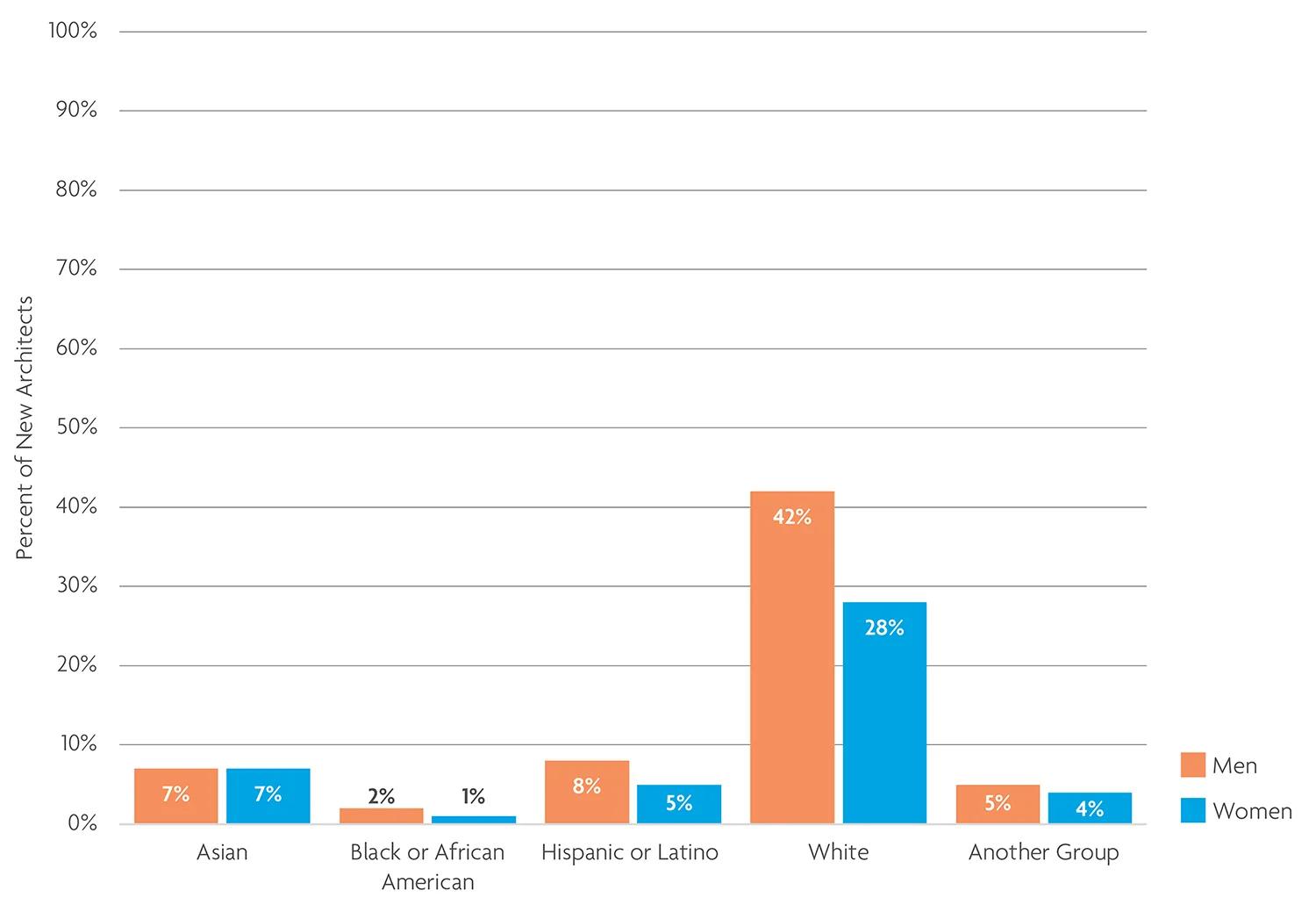
While representation in the overall pool of licensed architects is slow to change, representation among new architects demonstrates the impact of recent programmatic changes. More than 2 in 5 new architects are women, and over a third are people of color—an increase of 2 and 3 percentage points, respectively, compared to 2021.
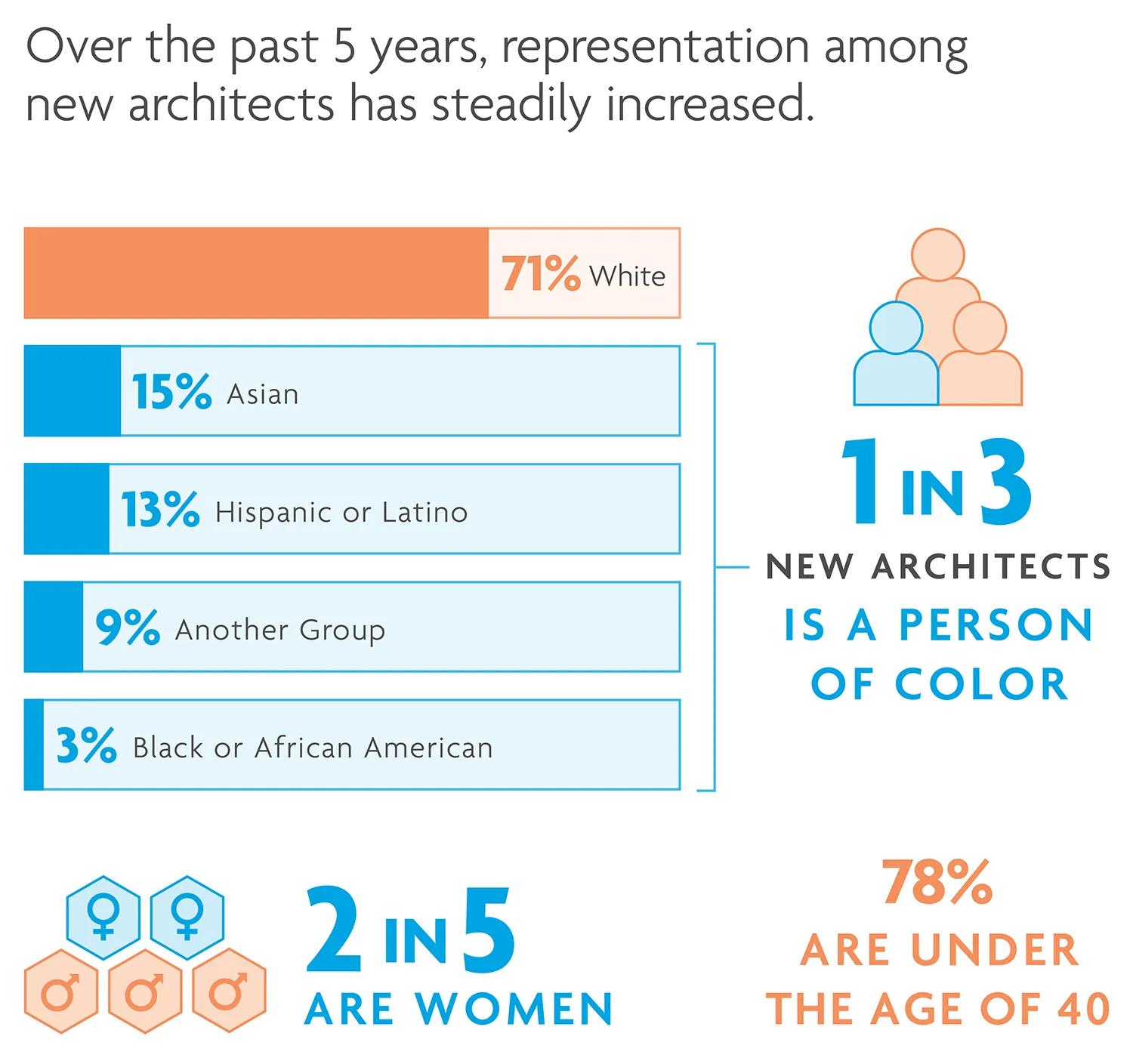
As the current cohort of candidates earn their licenses and become architects, NCARB expects representation in the new architect population to continue to increase.
Asian candidates consistently become licensed faster than their peers.
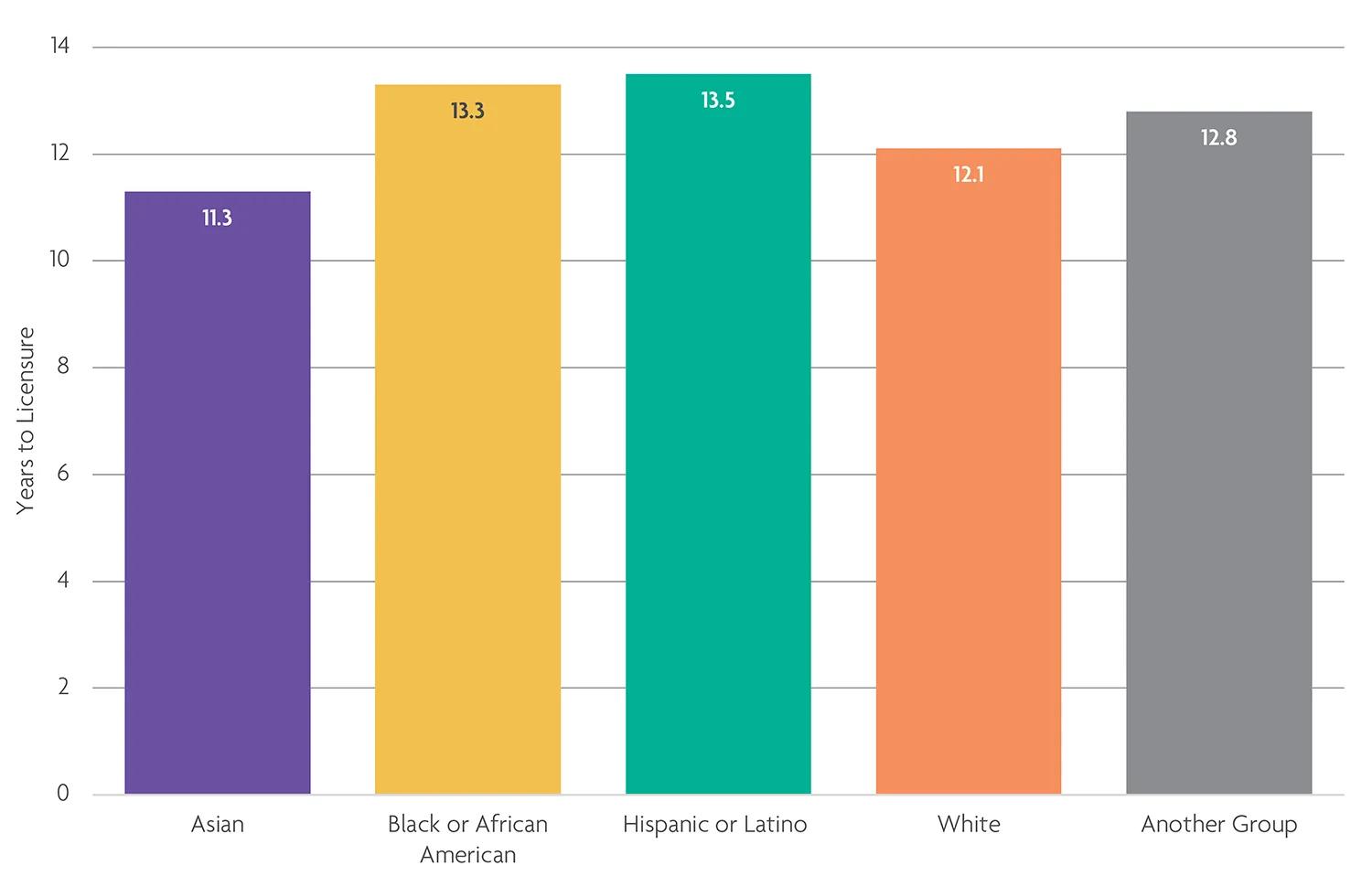
The average Asian candidate who completed the licensure path in 2025 took 11.3 years to do so. This is nearly 10 months faster than the average white candidate, who is typically the next fastest to complete the path to licensure. In comparison, Hispanic or Latino candidates took the longest at approximately 13.5 years.
Note: Because the sample size for underrepresented demographic groups is much smaller, the average time to licensure for these groups tends to fluctuate more significantly from year to year. Time to licensure data can also shift from previously reported numbers as candidates backdate experience or document additional information.
Women consistently earn their licenses faster than men.
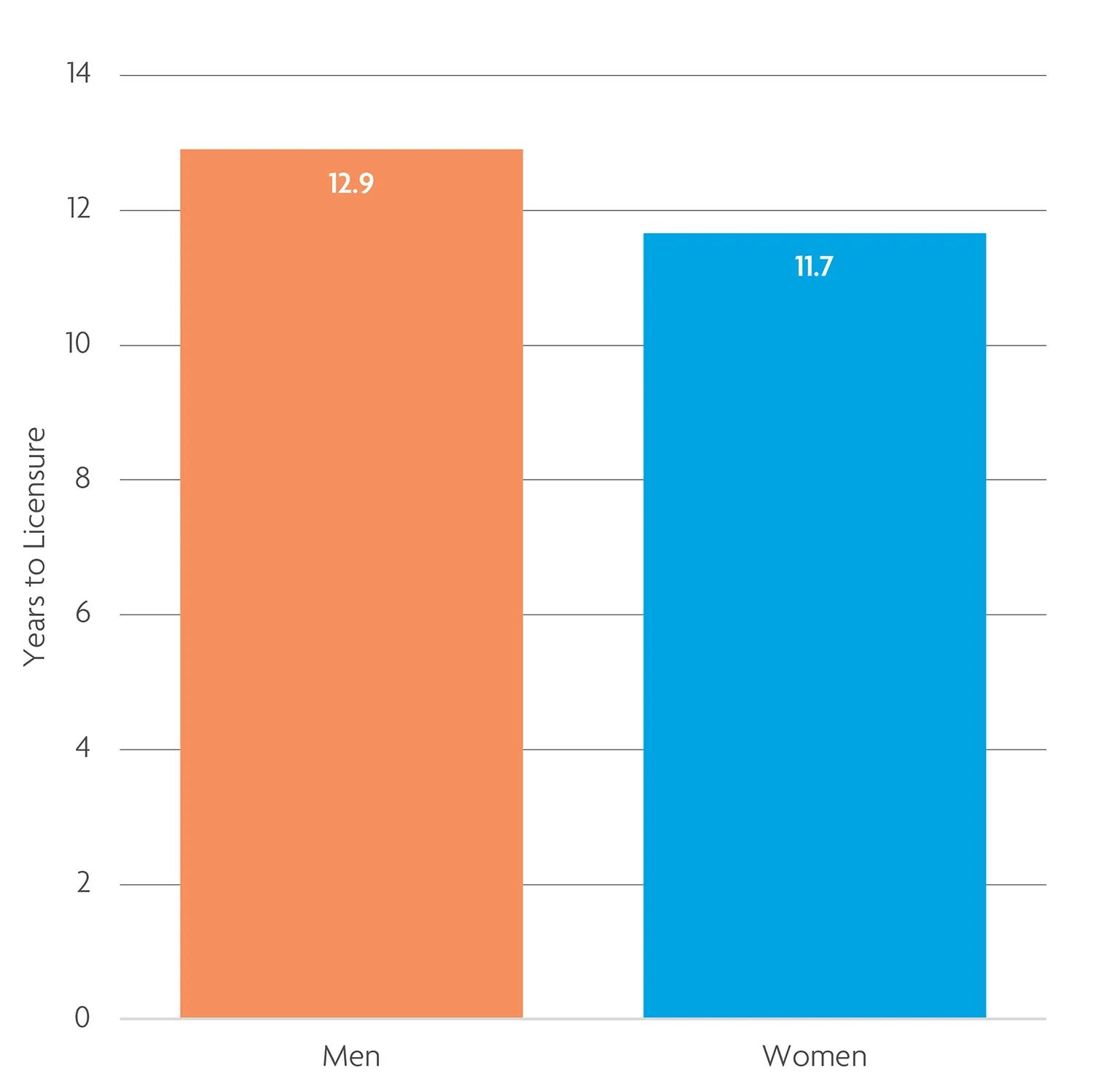
Historically, women have completed the licensure process in less time than their male peers, a trend that continued in 2025. The average woman who completed the path to licensure in 2025 took 11.7 years to do so, over a year faster than the average man. Though the time to licensure for women remained steady from the previous year, the average time to licensure for men fell by approximately 2 months compared to 2024.
Nearly half of licensure candidates are people of color.
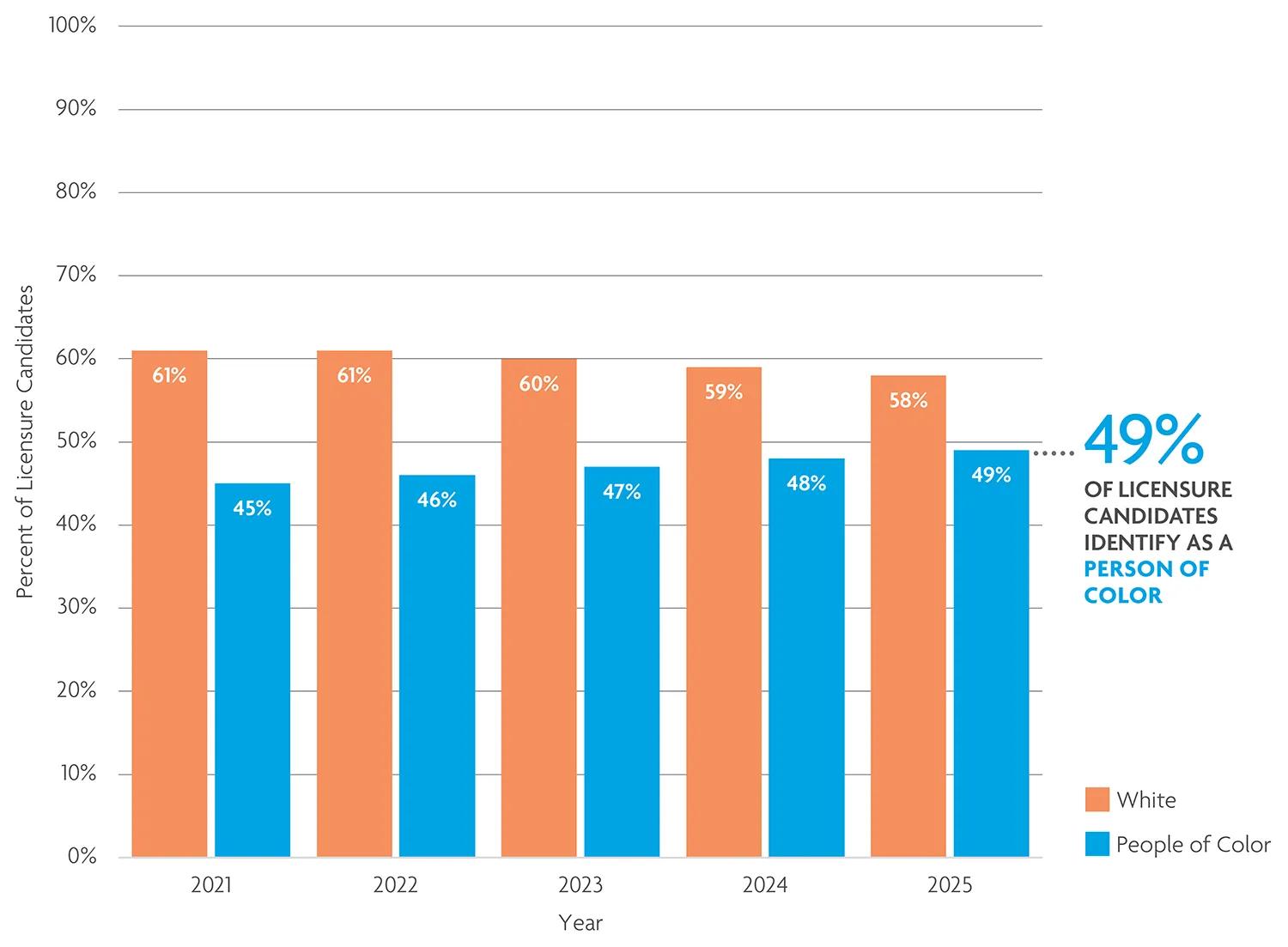
Over the past 5 years, diversity among candidates pursuing licensure has continued to increase. Just under half (49%) of licensure candidates in 2025 identified as a person of color—the highest level of racial and ethnic representation NCARB has seen in the candidate community. Representation in the community of licensed practitioners could increase in the years ahead as these candidates make their way into the architect population.
Gender representation inches closer to parity.
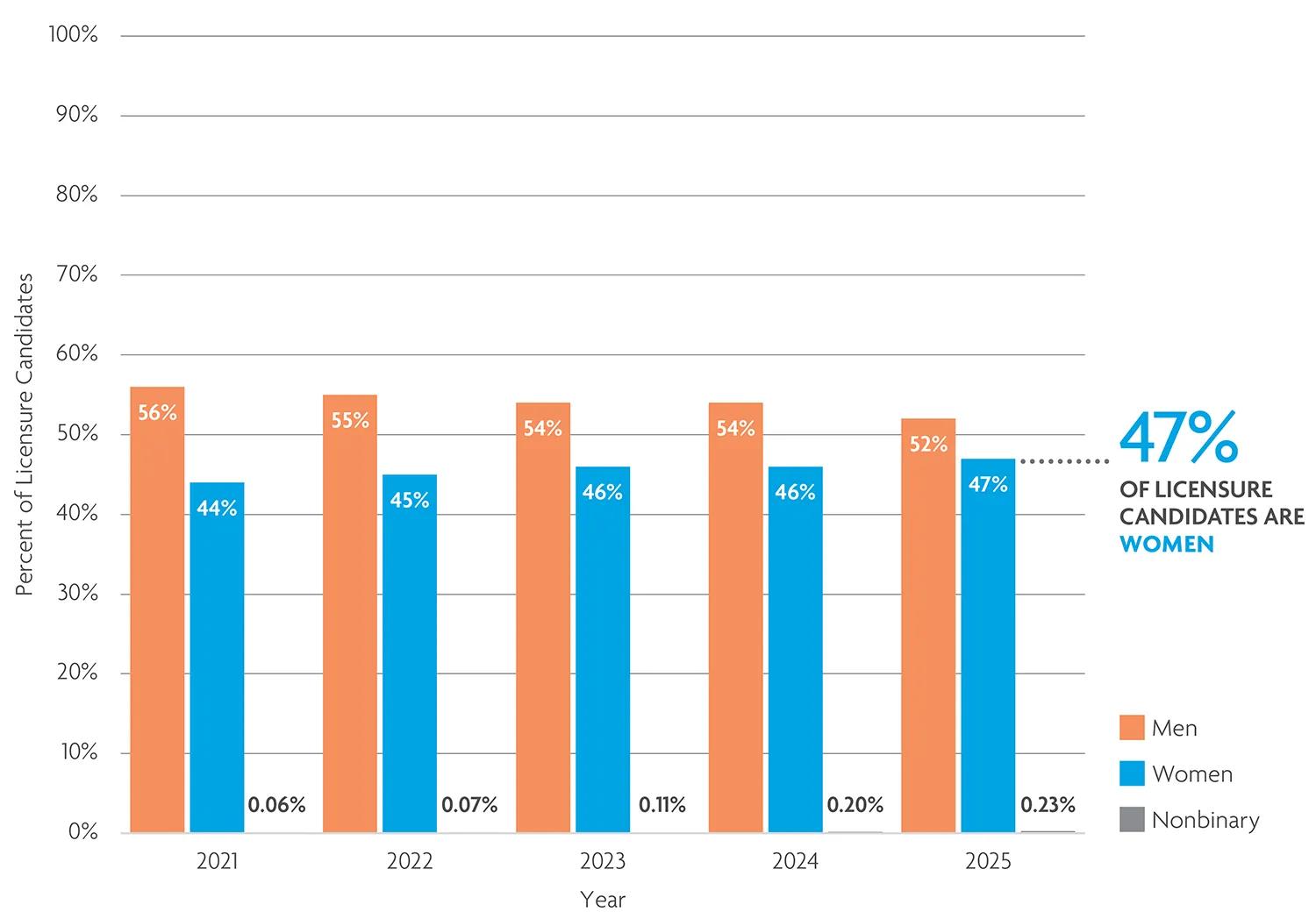
In 2025, 47% of the population of licensure candidates were women—a 3 percentage point increase since 2021. The licensure candidate population has been steadily approaching gender parity over the past decade. This trend reflects the increase in women pursuing careers in the architecture, engineering, and construction industry. It also highlights the impact of continuous work to promote greater equity and diversity within the architecture profession.
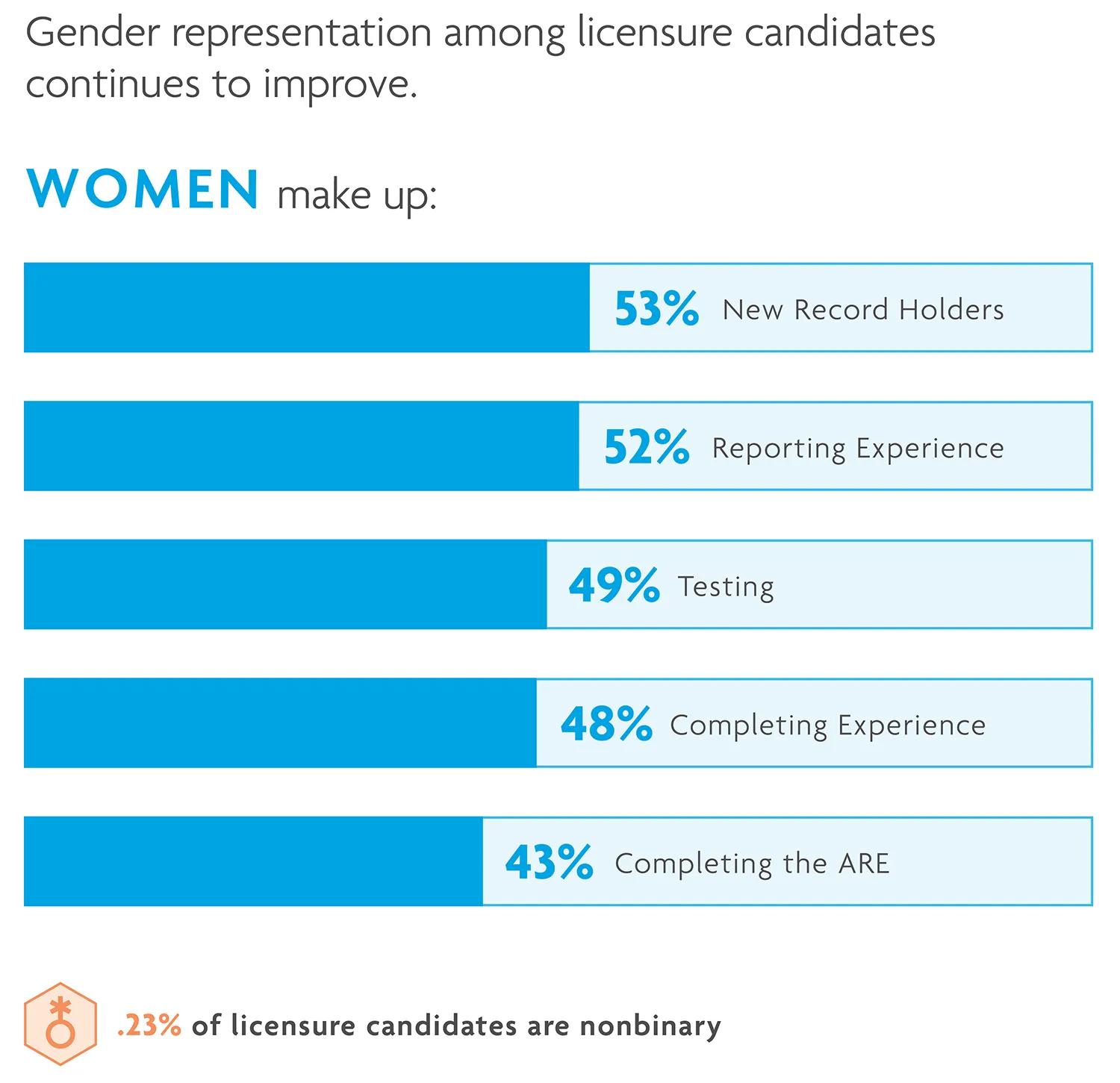
Currently, .23% of licensure candidates have self-identified as nonbinary. This is the second consecutive year that this demographic has crossed NCARB’s minimum sample size threshold of at least 30 individuals.
Diversity is slowly increasing among licensure candidates.
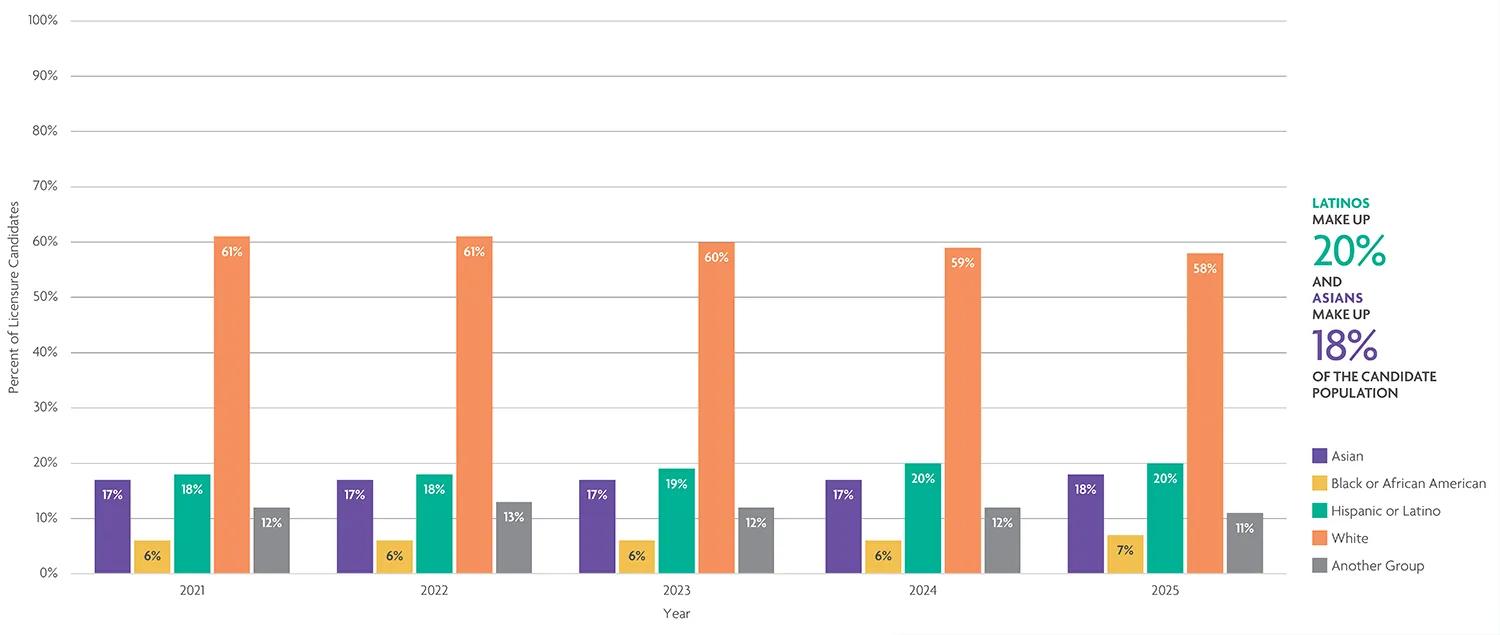
White candidates remain the most represented group, making up 58% of all licensure candidates. However, representation continues to improve for most other racial and ethnic groups. In 2025, 1 in every 5 licensure candidates identified as Hispanic or Latino—a 2-percentage-point increase since 2021. Growth has been slower for Asian candidates, who made up 18% of the total candidate population in 2025, as well as Black or African American candidates, who made up 7%—a 1 percentage point increase over the past 5 years for both groups.
Nearly one-third of licensure candidates are white men.
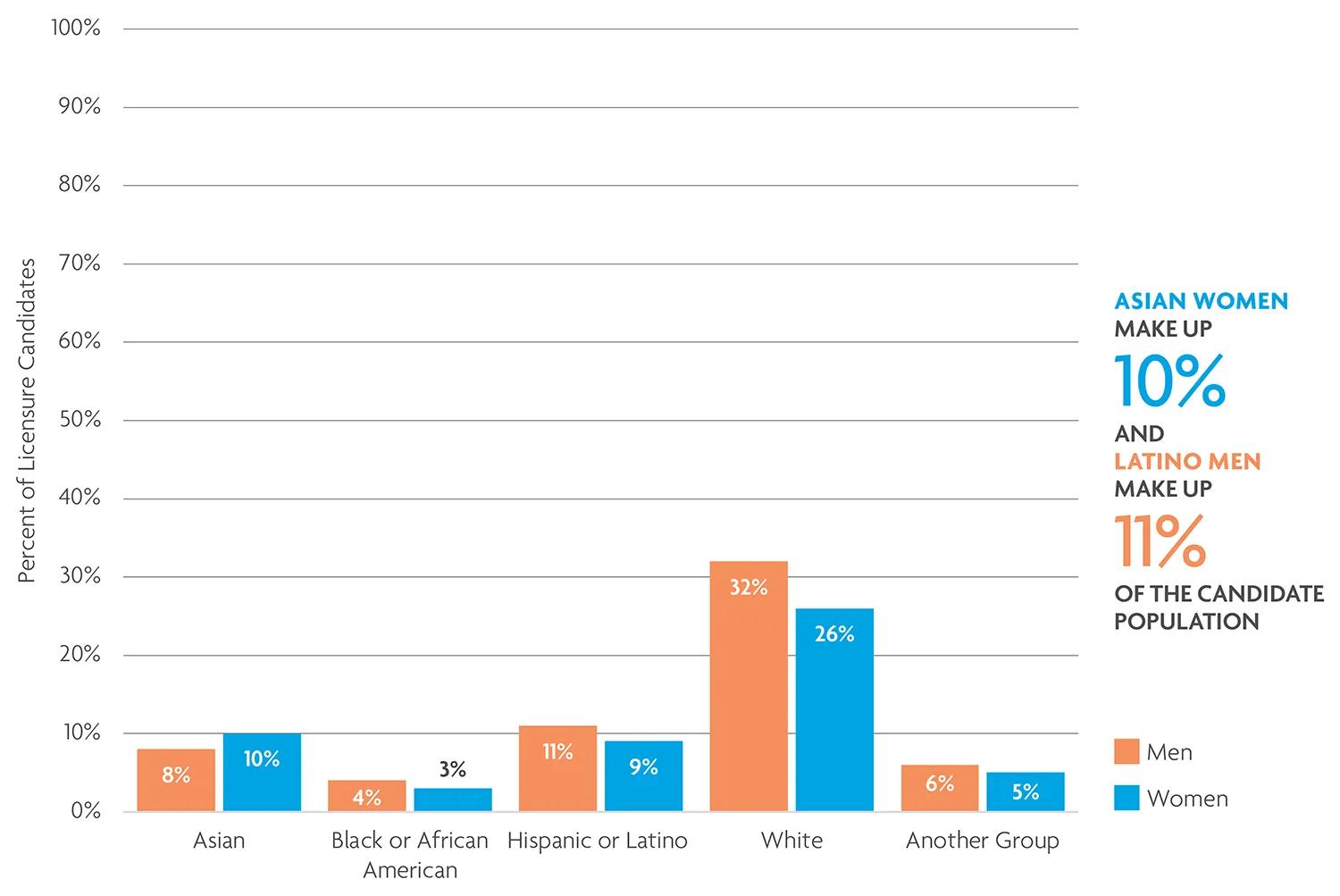
As we continue to facilitate greater diversity and equity at all levels of the architecture profession, progress is most evident in the licensure candidate population. While white men continue to be the most represented group of licensure candidates, making up 32%, people of color now make up nearly half of the candidate population at 49%. Among candidates of color, Latino men and Asian women are the most represented groups, accounting for 11% and 10% of the population, respectively. While Black or African American men (4%) and women (3%) continue to be one of the most underrepresented groups of the licensure candidate population, both have increased slightly—1%—since 2021.
8% of Record holders are using NCARB’s new demographic fields.
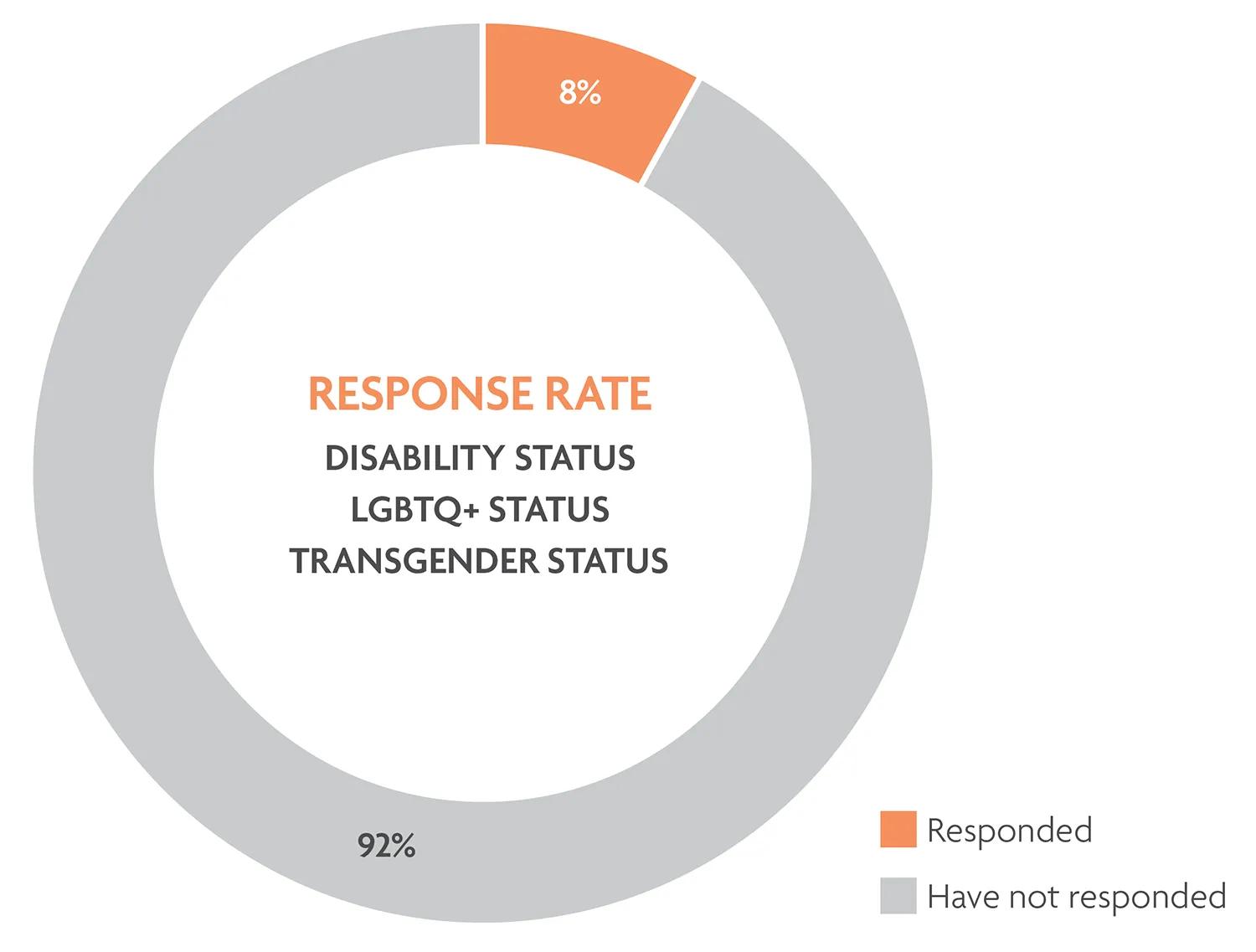
In 2023, NCARB began collecting demographic information on disability status, LGBTQ+ status, and transgender status. Providing this information is optional—approximately 8% of Record holders are taking advantage of the new demographic fields. Of Record holders who have chosen to self-identify, approximately:
- 9% identify as part of the LGBTQ+ community
- 5% have a disability
- 0.4% are transgender
NCARB aligns our demographic options with industry best practices, enabling the organization to make informed, equitable decisions regarding our programs and services.