
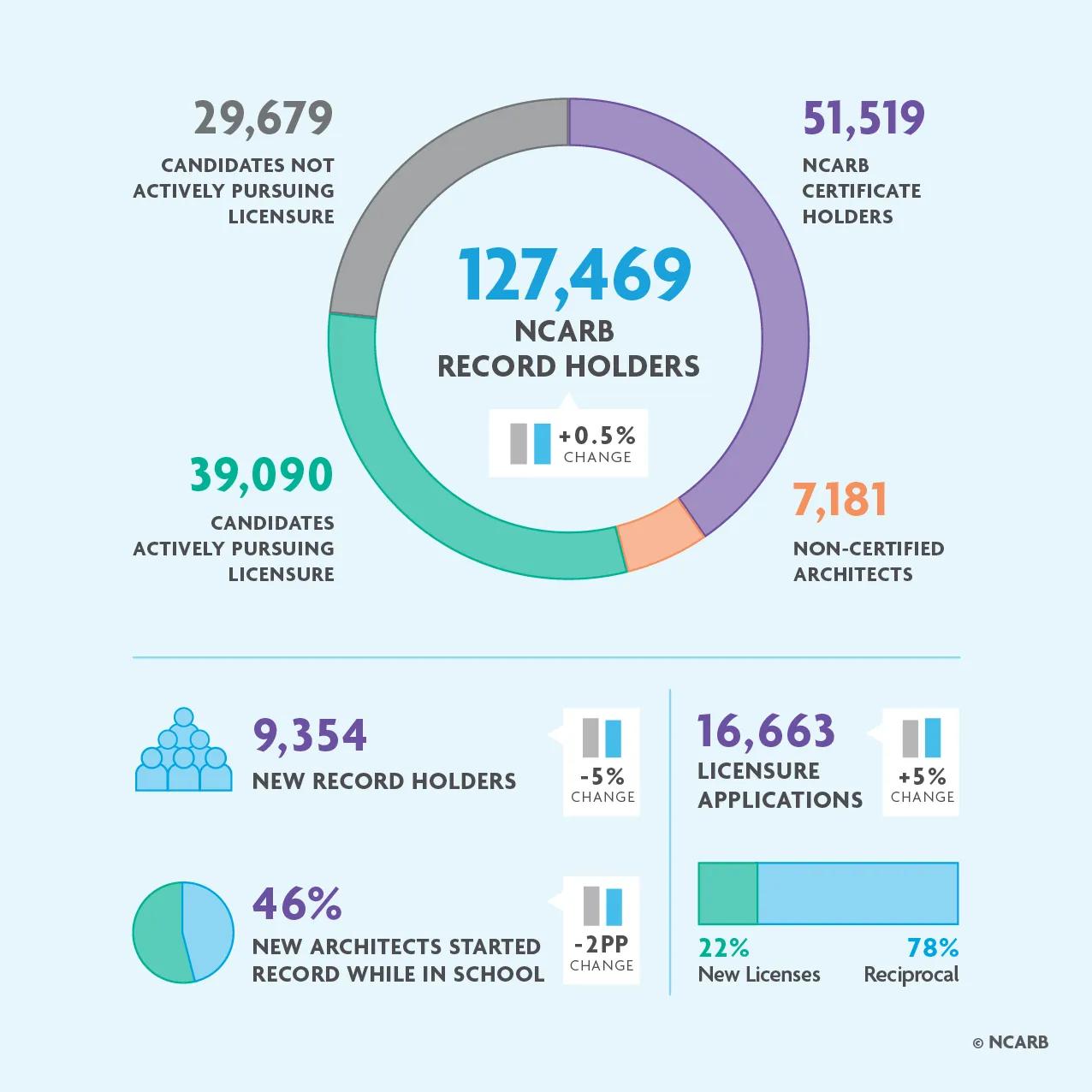
Throughout the year, NCARB worked to support our growing community of licensing board members, architects, licensure candidates, volunteers, and more. We offer support to the 55 U.S. architectural licensing boards who make up NCARB’s members, encourage program alignment across the United States, and assist individuals seeking licensure as they navigate jurisdictional requirements.
NCARB’s community continued to expand in 2025, with over 127,000 Record holders, more than 375 volunteers, and over 400 licensing board members. Our volunteer community—made up of practicing architects, emerging professionals, educators, and experts from other fields—worked together across 20 committees to develop resources for licensing boards, evolve the future of licensure, and more.
NCARB’s Record holder community continues to grow.
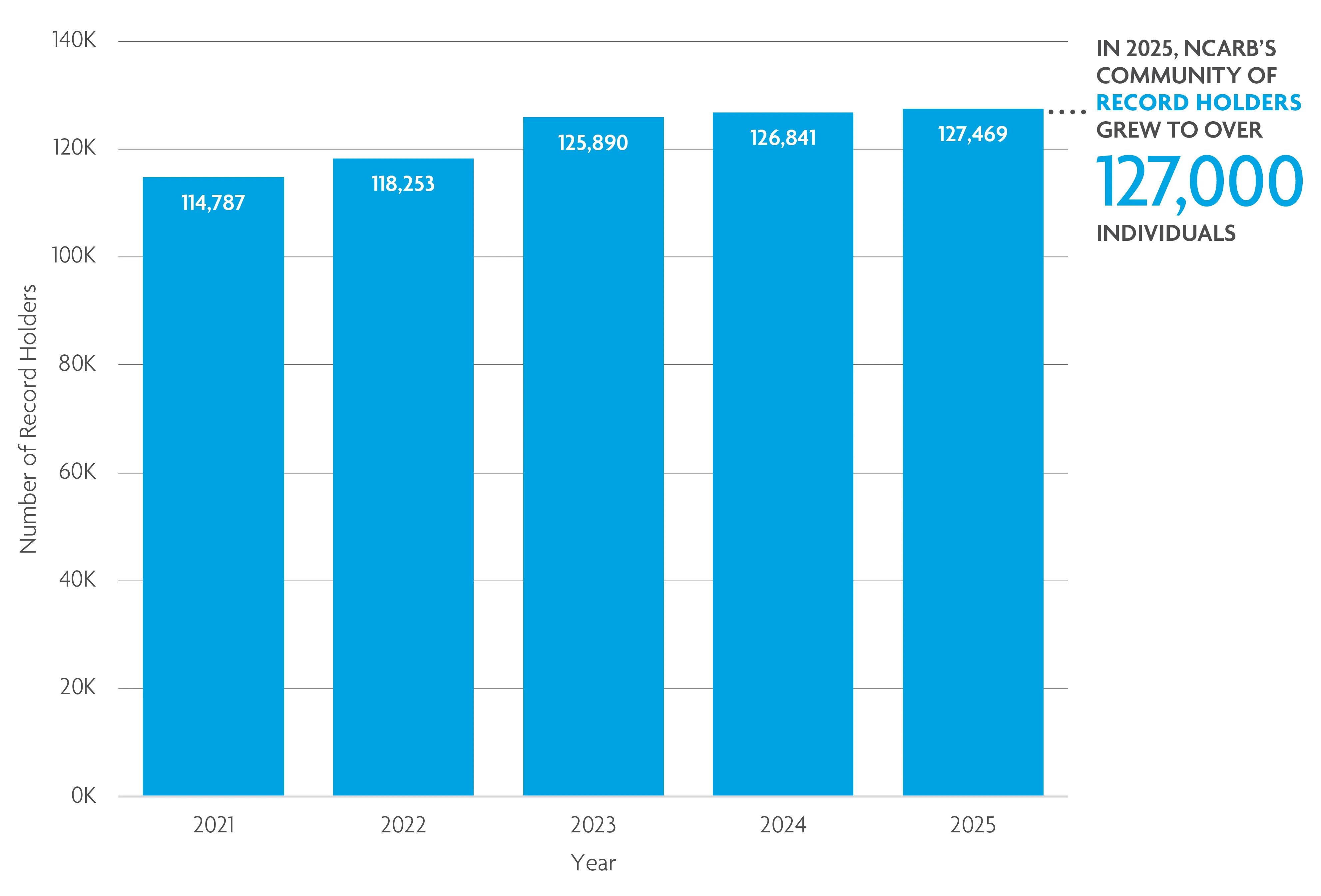
Over 127,400 individuals held an NCARB Record in 2025, a 0.5% increase compared to 2024. NCARB’s Record holder community has grown by more than 11% since 2021, a sign that the licensure pipeline has largely recovered from the impact of the COVID-19 pandemic.
WHO ARE NCARB RECORD HOLDERS? An NCARB Record holder is anyone who holds an active NCARB Record. This includes individuals from a variety of career stages, from students to emerging professionals to practicing architects.
Over 51,000 architects held an NCARB Certificate in 2025.
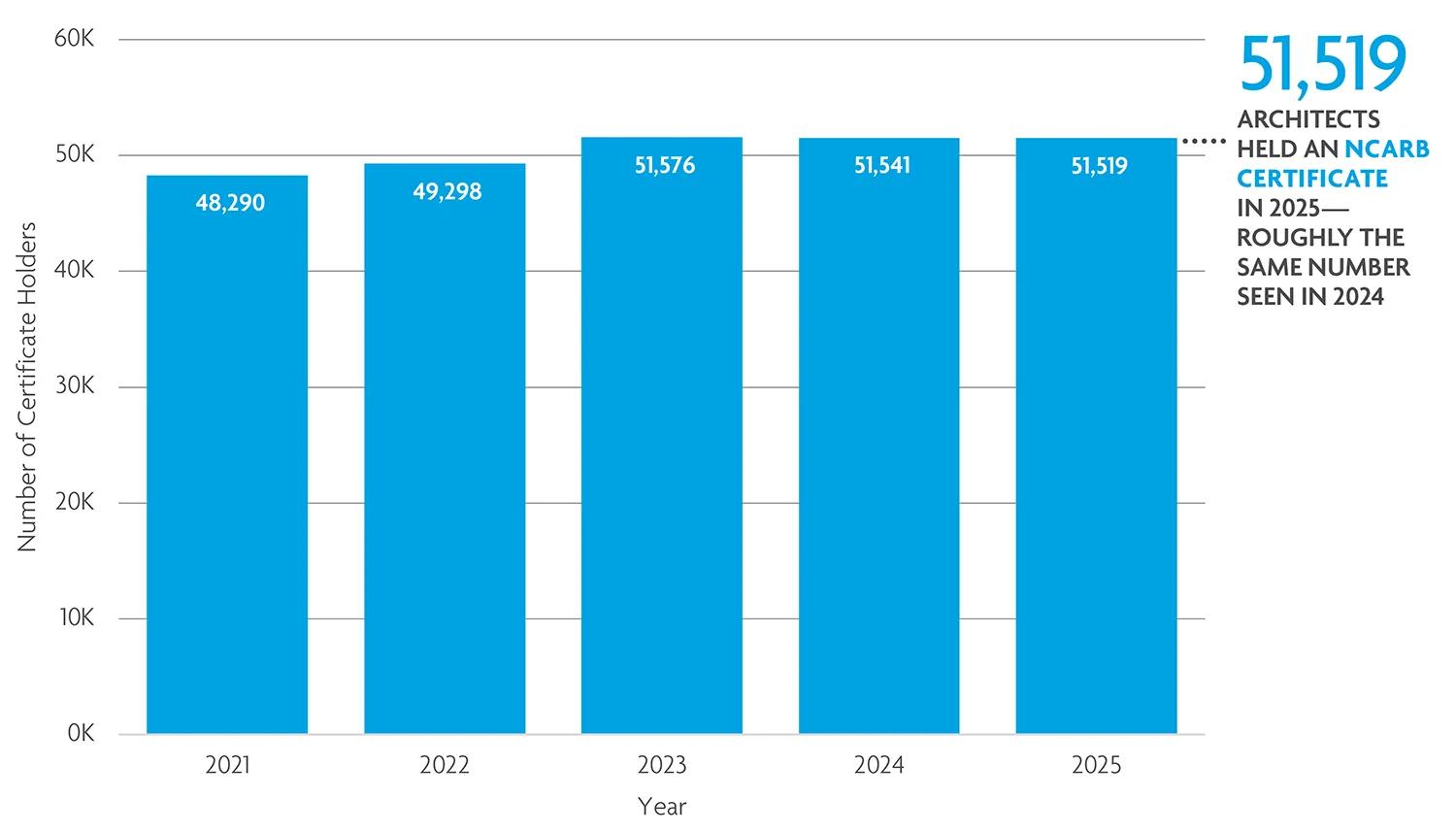
The number of NCARB Certificate holders held steady in 2025, with just over 51,500 architects holding an active NCARB Certificate. Despite fluctuation in the total number of licensed architects in the United States over the past several years, the number of NCARB Certificate holders has remained relatively unchanged since 2023.
NCARB continues to enhance the value of the NCARB Certificate, regularly releasing new continuing education courses on key industry topics and expanding our mutual recognition agreements (MRAs) with countries outside of the United States.
DID YOU KNOW? The NCARB Certificate simplifies the process of earning additional licenses in U.S. jurisdictions and can also be used to support licensure in several international locations.
The number of non-certified architects rose slightly.
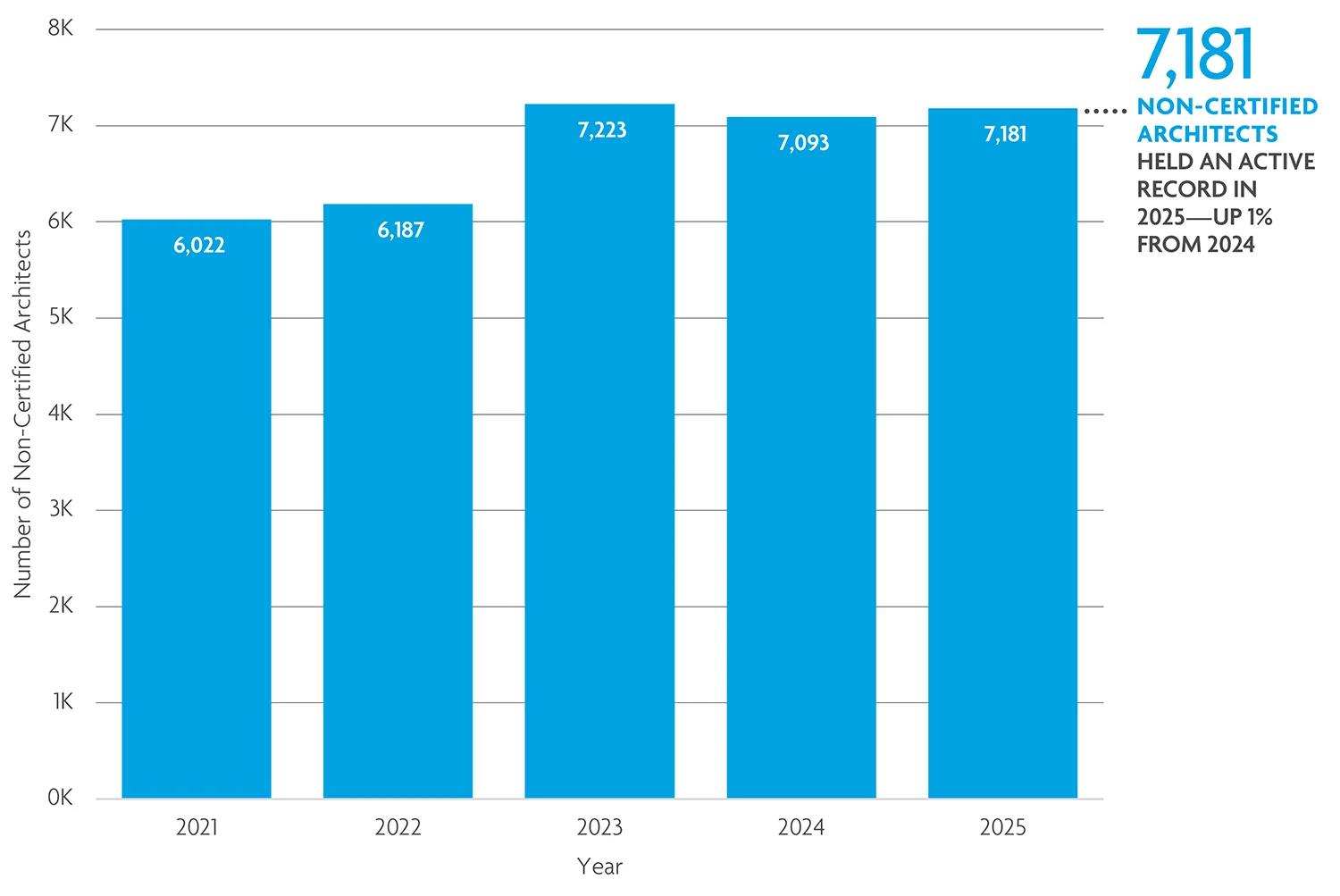
The number of non-certified architects with an NCARB Record rose by 1% in 2025. Many of these individuals are actively working toward earning an NCARB Certificate, typically through one of NCARB’s alternative pathways for those without a degree from a NAAB-accredited program or with an international background.
The number of non-certified architects with an active NCARB Record has held relatively steady over the past several years. The uptick seen in 2023 was most likely a result of NCARB’s amnesty campaign, which waived reactivation fees for architects with lapsed NCARB Records.
Reciprocal licensure applications on the rise.
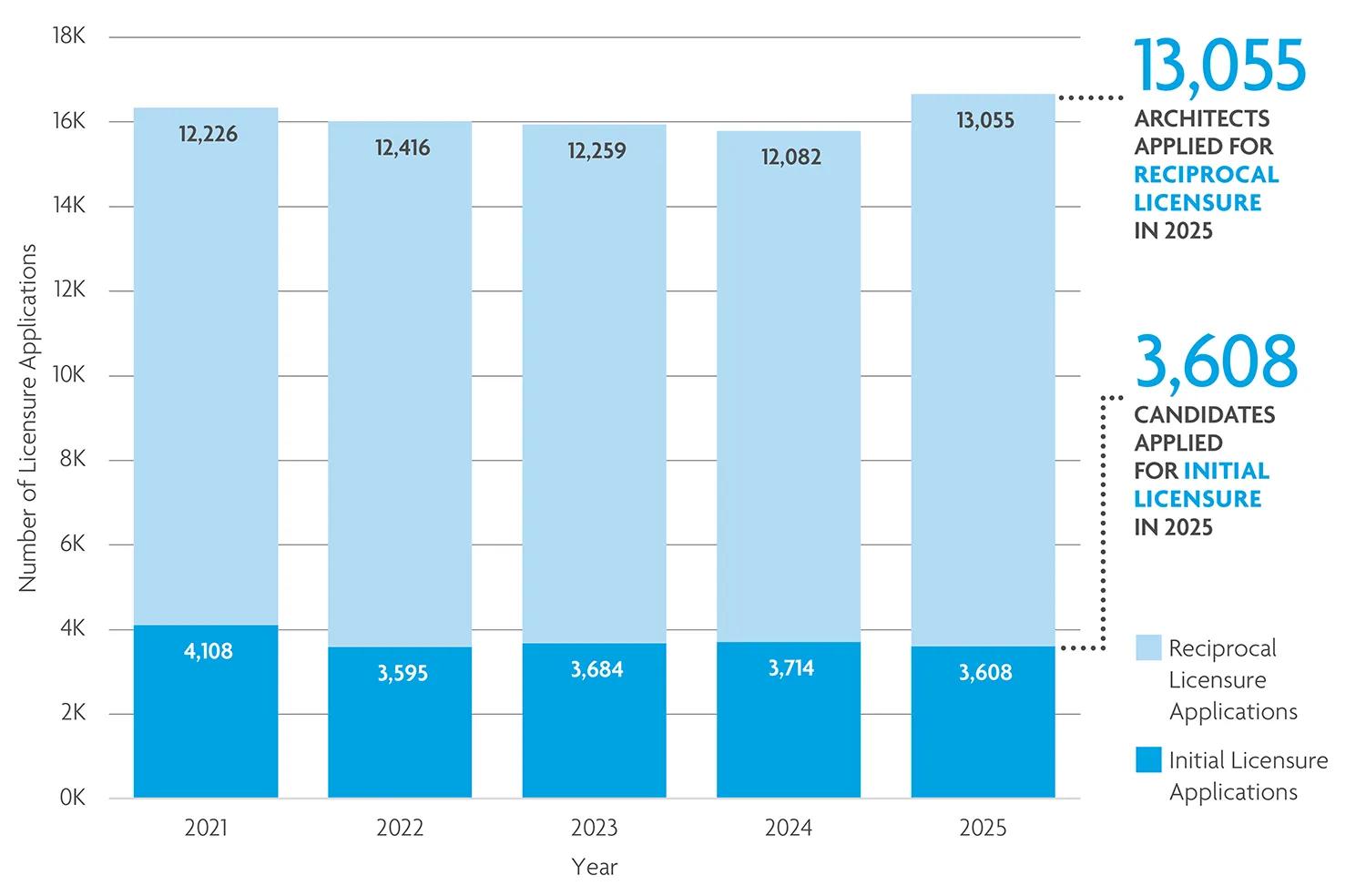
When candidates apply for an initial license or architects apply for a reciprocal (out-of-state) license, NCARB transmits their Records to the jurisdiction’s licensing board in support of their application.
The total number of transmittals rose by 5% in 2025, which was caused by an increase in reciprocal licensure transmittals. Initial licensure transmittals held relatively steady at just over 3,600. Of the over 16,500 transmittals, more than 13,000 were in support of reciprocal licensure applications— approximately 1,000 more than in 2024.
Despite this increase in reciprocal licensure applications, NCARB’s member licensing boards reported an overall decrease in the number of out-of-state licensees, likely a result of some architects allowing their existing reciprocal licenses to lapse.
The number of new Record holders continues to fall.
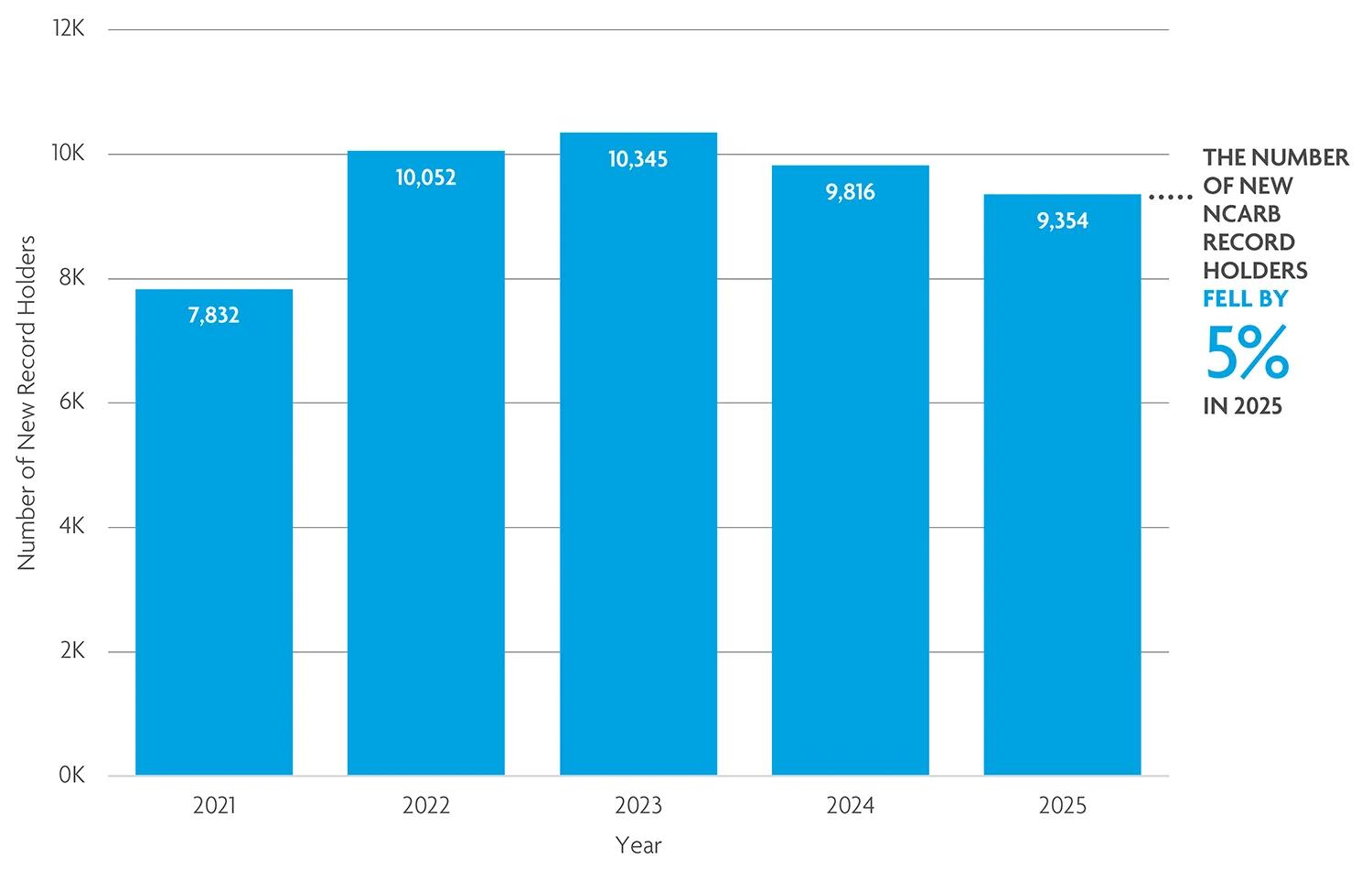
The number of new NCARB Record holders fell to just over 9,300 in 2025—the second year in a row NCARB has seen a 5% drop in the number of individuals creating an NCARB Record. However, this number is still well above the roughly 8,500 new Records per year seen just before the onset of the COVID-19 pandemic.
The continued decline in new Record holders is likely a sign that the rush of new Record creations seen after the pandemic is beginning to fade as the licensure pipeline returns to a new level of normal.
DID YOU KNOW? NCARB considers creating an NCARB Record the first step on the path to licensure.
The proportion of architects starting an NCARB Record in school fell slightly.
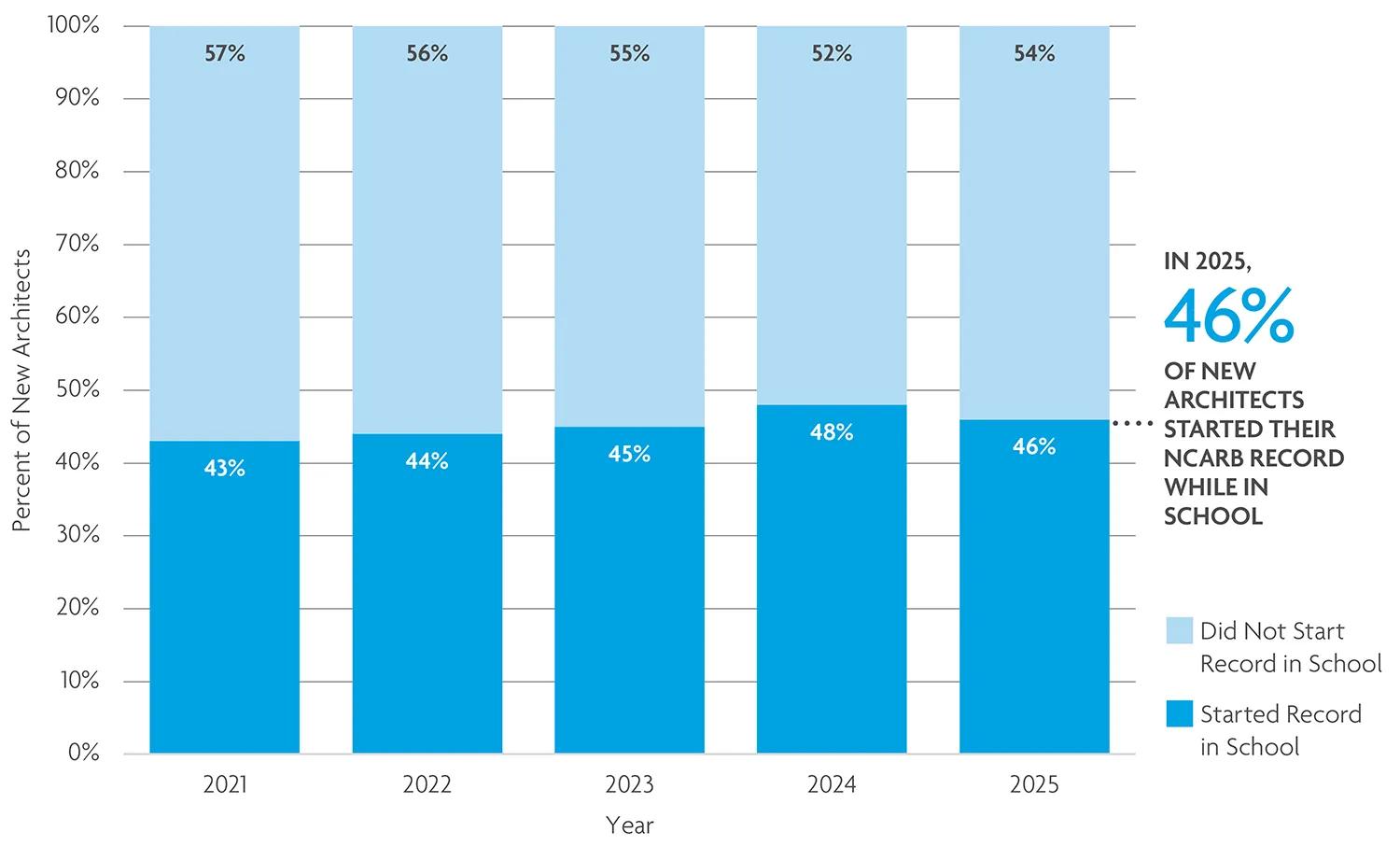
Slightly less than half (46%) of all new architects licensed in 2025 started their NCARB Record while in school, a 2-percentage point decrease compared to 2024. The remaining 54% waited to start their NCARB Record until after graduating college—a common choice for those who don’t have significant Architectural Experience Program® (AXP®) experience to report while in school. This is the first decrease in the proportion of architects starting their Record in school that NCARB has seen in recent years.
Because NCARB considers starting a Record the first step to earning an architecture license, a decline in the proportion of new architects starting their Record in school could signal that licensure candidates are waiting to start the licensure process until later in their careers.
NCARB’s Professional Conduct Committee reviews and recommends disciplinary action.
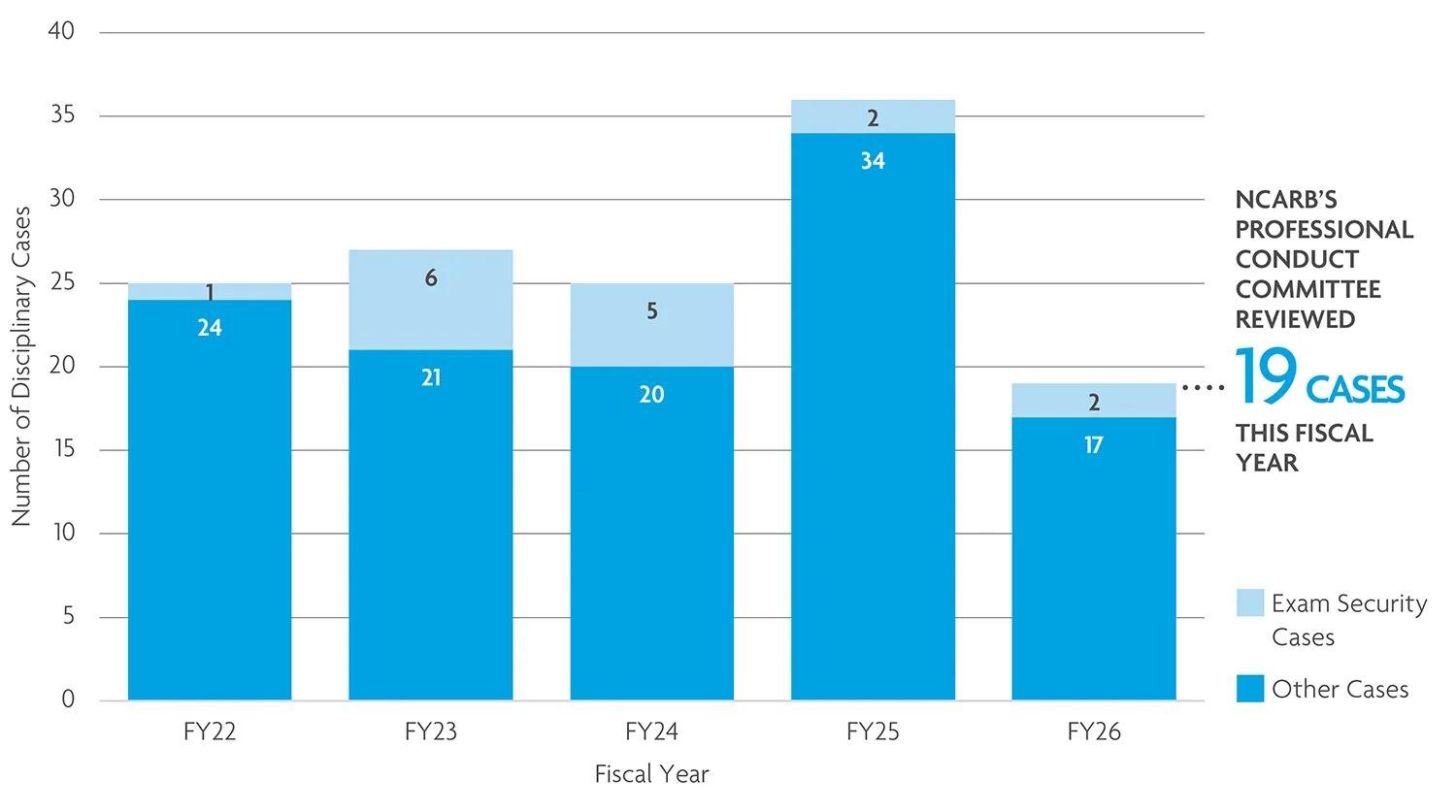
NCARB’s Professional Conduct Committee is responsible for overseeing NCARB’s policies and practices regarding the professional conduct of NCARB’s Record holders and customers. Each year, the committee reviews any cases where an individual may have violated NCARB’s professional conduct standards.
Typically, these cases involve reviewing findings from or actions taken by a jurisdictional licensing board, but they can also involve the violation of NCARB’s Architect Registration Examination® (ARE®) Candidate Agreement. In FY26 (July 2025 – June 2026), NCARB’s Professional Conduct Committee reviewed 19 cases, including 2 cases related to breaches of the exam’s content or security.
Note: The number of cases reported for a fiscal year may shift slightly as the committee concludes its work for the fiscal year after NCARB by the Numbers’ publication.