
The licensure process is designed to help candidates build specific knowledge areas, skills, abilities, and behaviors—known as competencies. Candidates typically develop these competencies by earning a degree from a program accredited by the National Architectural Accrediting Board (NAAB) and completing the Architectural Experience Program® (AXP®). But NCARB’s data shows that this traditional “single path” creates pinch points, with over one-third of candidates eventually stepping away from licensure.
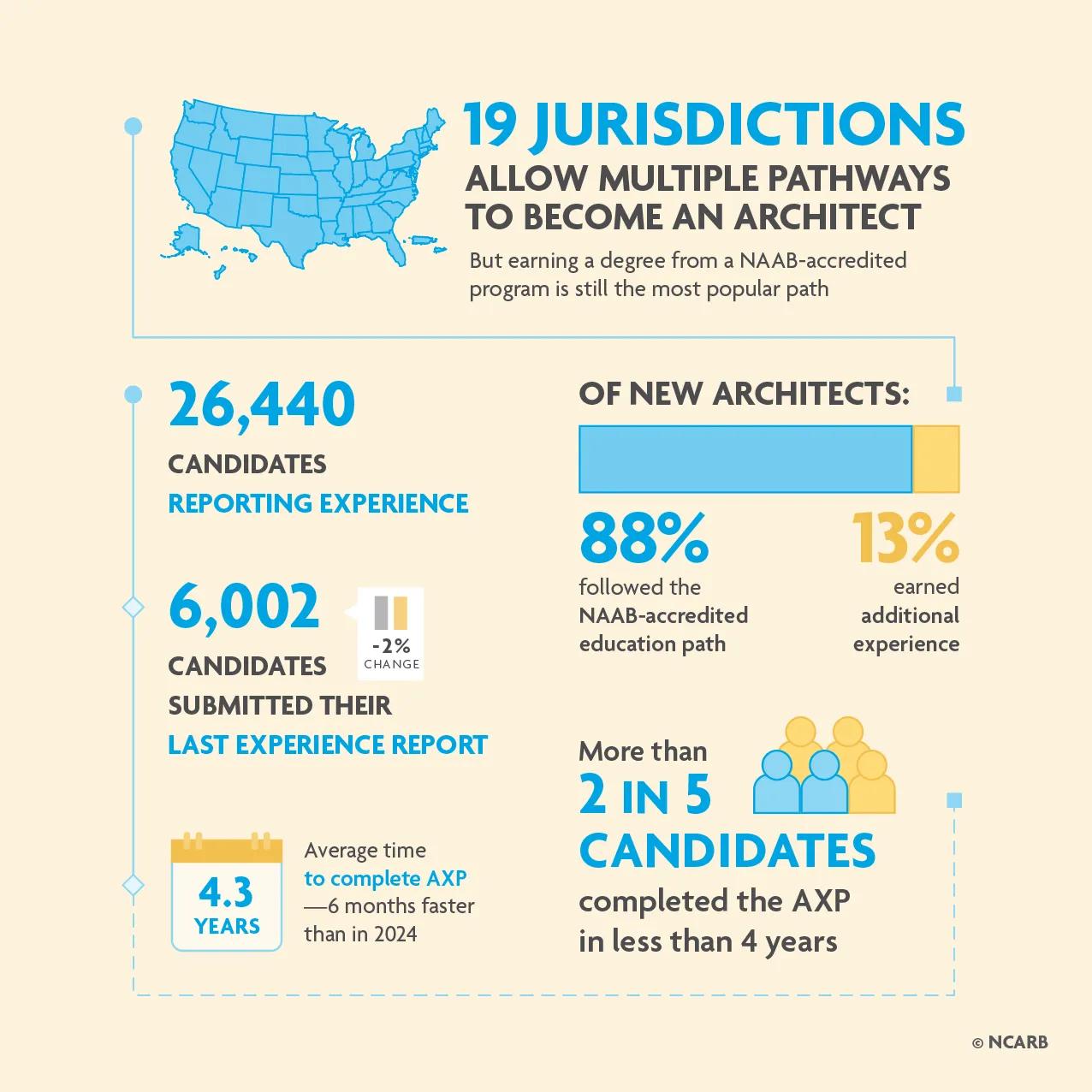
NCARB’s Pathways to Practice effort aims to address these pinch points by ensuring our programs are more flexible, yet equally rigorous. New data from the 2026 edition of NCARB by the Numbers highlights the impact of recent policy changes, including an expanded section on building competency.
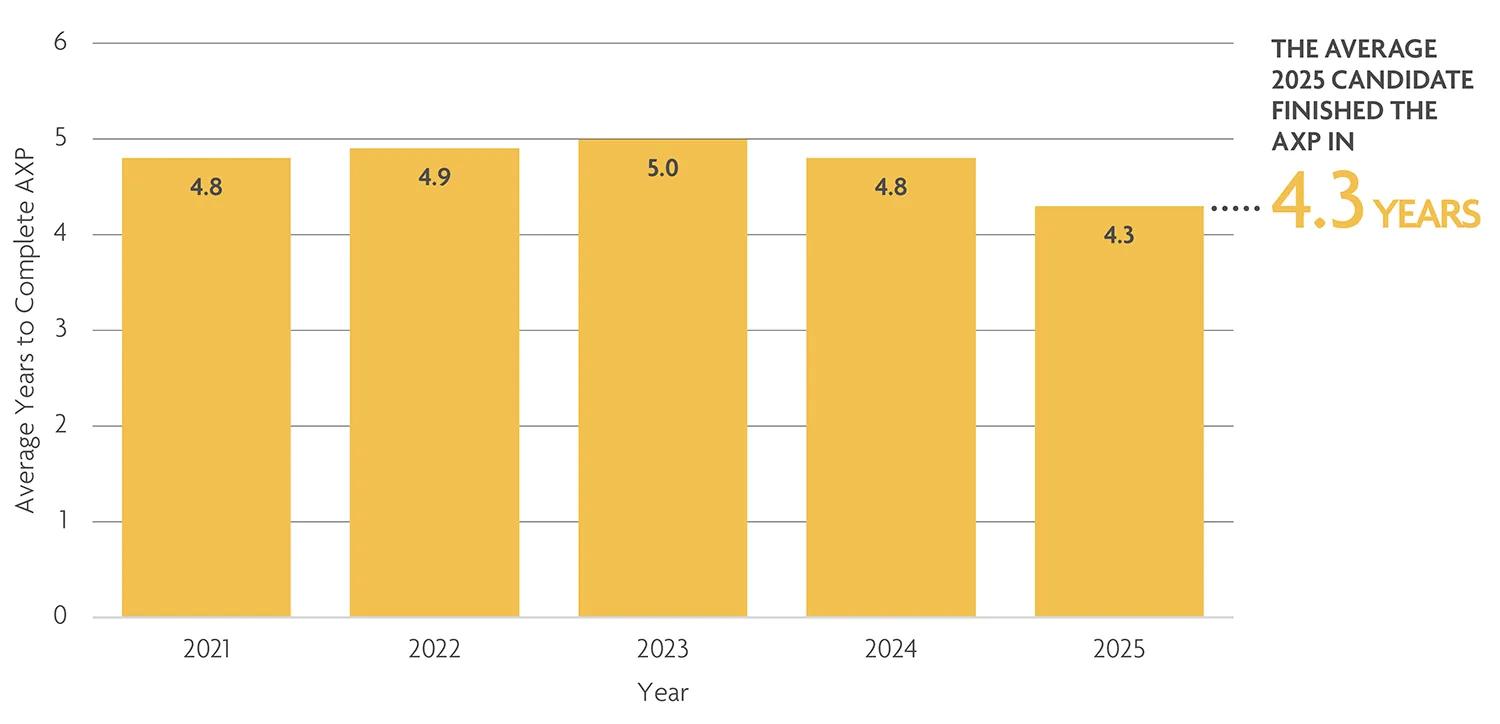
NCARB made several updates to the AXP in 2025, including a more flexible reporting policy. As a result, the data shows an above-average number of candidates completing the AXP, as well as a drop in the average time to complete the program. Candidates who completed the AXP in 2025 took an average of 4.3 years to complete the program, 6 months faster than those who completed it in 2024.
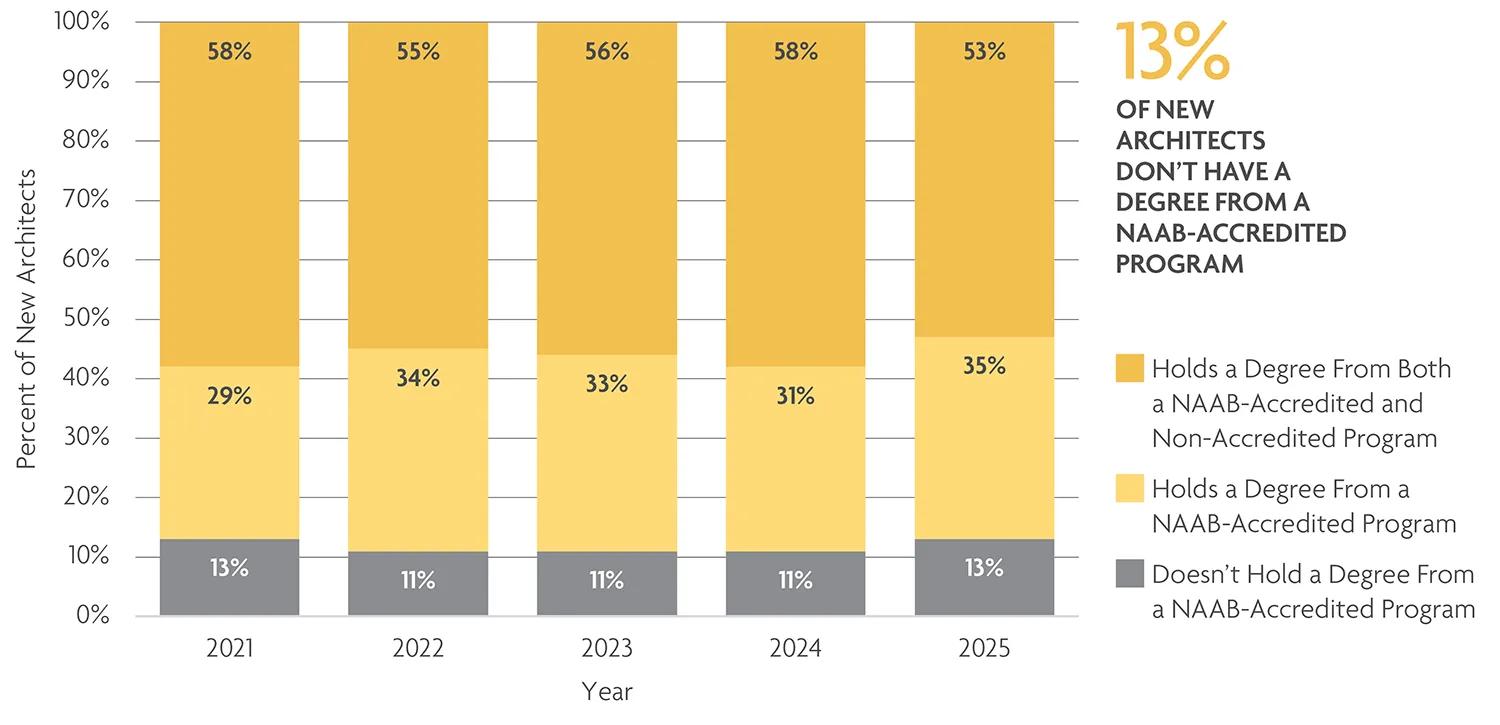
Most jurisdictions require a NAAB-accredited degree for initial licensure, which is why it remains the most common path. However, the proportion of candidates pursuing licensure through alternative pathways is growing. Nearly 20 jurisdictions now accept multiple pathways, where candidates can earn additional experience in lieu of a degree from a NAAB-accredited program. In 2025, the proportion of new architects without a degree from a NAAB-accredited program rose to 13%, up 2 percentage points from 2024. As part of Pathways to Practice, NCARB is working to create multiple pathways to licensure that include a variety of education, experience, and examination opportunities.
To learn about the impact of offering flexible licensure paths, explore the 2026 NCARB by the Numbers.